In this article
Beverages are among the most enzyme-dependent products in the food industry. Juice, beer, wine, plant-based drinks and protein shakes all start from raw materials full of pectin, starch, beta-glucan or protein that make processing slow and products unstable. This article focuses on drinks and sets out the specific advantages enzymes bring at each stage.
Why beverages need enzymes
A drink has to flow, filter, stay clear or stay evenly cloudy, and taste the same in every pack. The raw materials often work against this:
- Fruit is held together by pectin, which traps juice and causes haze.
- Barley and oats contain beta-glucans that make liquids thick and slow to filter.
- Cereal bases contain starch, which gels on heating and has no sweetness of its own.
- Milk contains lactose, which some consumers avoid and which can crystallise in concentrates.
- Plant and dairy proteins can be thick, poorly soluble or prone to haze.
Each of these problems has a matching enzyme. Because enzymes act on one type of bond, they fix the problem without changing the rest of the drink.
Matching the enzyme to the drink
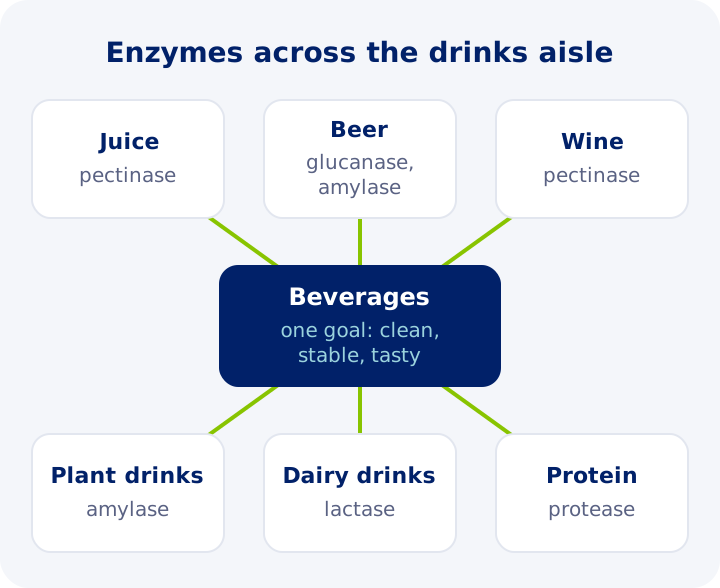
The table below links each beverage category to its main processing challenge and the enzyme that addresses it.
| Beverage | Challenge | Enzyme | Advantage |
|---|---|---|---|
| Fruit juice | Low yield, haze | Pectinase, cellulase | More juice, stable clarity |
| Beer | Thick wort, slow filtration | Beta-glucanase, amylase | Faster run-off and filtration |
| Wine | Pressing and settling | Pectinase | Better extraction and clarification |
| Oat and rice drinks | Starch gel | Amylase | Lower viscosity, natural sweetness |
| Dairy drinks | Lactose | Lactase | Lactose-free, sweeter taste |
| Protein drinks | Viscosity, solubility | Protease | Smoother, more soluble protein |
Fruit juice: yield and clarity
Fruit juice is the clearest example of the value of enzymes. When fruit is milled, pectin holds water in a gel-like structure and makes the mash hard to press. Adding pectinase to the mash breaks this structure so more juice flows out at the press.
A second treatment, called depectinisation, follows for clear juices. Pectinase breaks down the dissolved pectin in the raw juice so that cloud particles can settle and the juice can be filtered. This also reduces the risk of haze or gelling when the juice is concentrated.
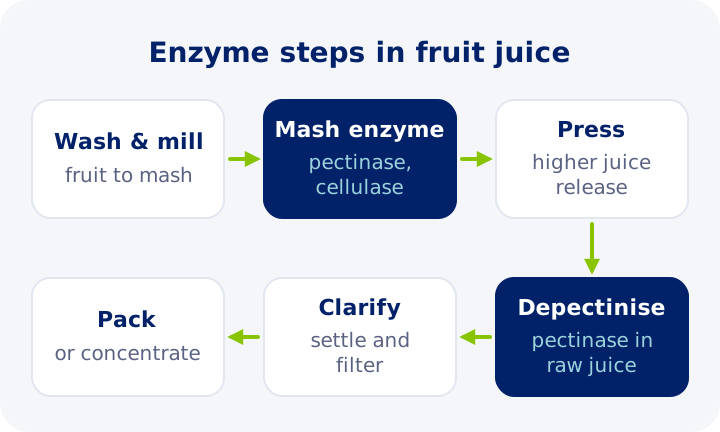
Cloudy juices and purées follow a different logic. Here the aim is a stable, even cloud, so the enzyme choice and dose are set to improve yield without stripping out the pectin that holds the cloud.
Brewing: wort flow and filtration
In brewing, malt supplies most of the enzymes needed to turn starch into fermentable sugar. Added enzymes help when the malt is under-modified or when brewers use adjuncts such as rice, maize, sorghum or unmalted barley.
Beta-glucanase breaks down beta-glucans from barley cell walls. Lower viscosity means faster wort separation and easier beer filtration. Amylases support starch conversion when adjuncts dilute the malt’s own enzyme power, and glucoamylase can be used to raise fermentability for low-carbohydrate beer styles. To understand where the malt’s own enzymes come from, see our explainer on what malt is.
Wine, plant drinks and dairy drinks
Wine: pectinases help release juice and colour from grape skins, speed up settling of the must and make clarification easier. Winemakers choose products low in side activities that could affect colour or aroma.
Oat, rice and other cereal drinks: cooked cereal starch forms a thick gel. Amylases cut the starch into shorter chains and sugars, which lowers viscosity and gives a naturally sweet taste. The degree of conversion sets both mouthfeel and sweetness.
Dairy drinks: lactase converts lactose into glucose and galactose for lactose-free milk and flavoured milk drinks. Our guide to lactase in dairy covers this in detail.
Protein drinks: controlled protease treatment can make plant or dairy proteins more soluble and less viscous. The degree of hydrolysis has to be managed carefully, as extensive hydrolysis can create bitter peptides.
The advantages, summed up
Across these categories, the main advantages of enzymes are consistent:
- Higher yield: more juice, extract or soluble solids from the same raw material.
- Faster processing: lower viscosity speeds pressing, separation and filtration.
- Better stability: less haze, sediment and gelling during storage.
- Sugar profile control: sweetness built from the drink’s own starch or lactose.
- Milder conditions: specific action at moderate temperatures, without harsh chemicals.
- Consistency: dose and time give a repeatable result from batch to batch.
Tip: Raw material changes with season and variety. Recheck enzyme dose at the start of each new crop or malt lot rather than relying on last season's settings.
Questions to ask before choosing a beverage enzyme
A short checklist saves time when comparing products from different suppliers:
- Main activity and units: how is activity measured, and is it comparable with your current product?
- Side activities: does the product contain other enzymes that could affect colour, aroma or cloud stability?
- Working range: does its pH and temperature range match your mash, wort or juice conditions?
- Form: is a liquid easier to dose on your line than a powder?
- Documents: are a TDS, CoA and the certifications your customers ask for available for each lot?
Asking these questions early avoids repeating trials later, and makes it easier to switch suppliers or scale to new lines without surprises.
Practical points for beverage plants
Enzymes in drinks are usually added before a heat step. Pasteurisation then inactivates them, which stops the reaction at a defined point. Plan the holding time and temperature so the enzyme has enough time to work before that heat step.
Dosage depends on raw material, temperature, pH and contact time. Use supplier data as a starting range, then confirm with bench and plant trials. Measure clear end points such as viscosity, filtration rate, turbidity, Brix or degree of conversion.
Working with Enzyme Bioscience
Enzyme Bioscience supplies food enzymes for juice, brewing, dairy and plant-based drinks from its FDA-registered, GMP and ISO 9001:2015 plant in Surat. Our R&D team can help design trials, and our ENZYVIVE® service can build a blend for your process. Request samples, a TDS or a CoA to get started.
Frequently asked questions
Pectinases are the main enzymes. They are added to the fruit mash to release more juice and to the raw juice to break down pectin before clarification. Cellulases and hemicellulases are sometimes combined with pectinase for fruits with tough cell walls.
Beta-glucans from barley cell walls make wort and beer viscous, which slows lautering and filtration. Beta-glucanase breaks these chains down and lowers viscosity. This is especially useful with under-modified malt or with unmalted barley and other adjuncts.
They can help. Amylases convert the starch in oat or rice bases into sweeter sugars, and lactase turns lactose into sweeter glucose and galactose. Less added sugar may then be needed for the same taste, but the sugars formed still count towards total sugars on the label.
Usually not in the same way as clear juice. Full depectinisation would make the cloud settle out. Cloudy juices may still use a mash enzyme for yield, but the enzyme type and dose are chosen to keep a stable cloud.
In most cases no. Pasteurisation or other heat treatment inactivates them before packing. If a drink is not heat-treated, or the enzyme is heat-stable, check residual activity to avoid changes during storage.