In this article
Malt is one of the oldest processed ingredients in food. It gives beer its fermentable sugar, malted drinks their familiar flavour and many breads their colour and crust. At its heart, malt is an enzyme story: sprouting a grain builds up the enzymes that turn its starch into sugar. This guide explains what malt is, how it is made, the main types and how it compares with added enzymes.
What is malt?
Malt is cereal grain that has been soaked in water, allowed to germinate and then dried with hot air in a kiln. Barley is by far the most common malting grain, thanks to its husk, which protects the sprout and later helps filtration in brewing. Wheat, rye, oats and sorghum are also malted, and in India malted finger millet (ragi) has a long tradition in foods and drinks.
The purpose of malting is to start germination and then stop it at the right point. By then the grain has built up enzymes and partly broken down its own cell walls and proteins, a change maltsters call modification.
How malt is made
Steeping
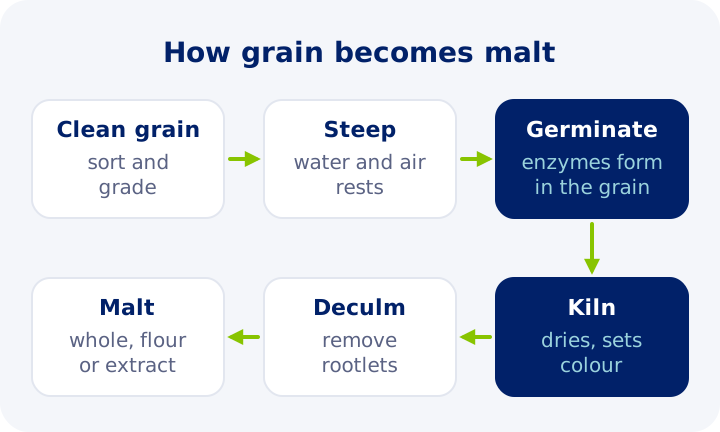
Clean, graded grain is soaked in water in cycles, with air rests in between so the grain can breathe. Steeping raises moisture to the level needed for germination.
Germination
The wet grain is spread in beds or drums and kept cool and aerated for several days. The embryo signals the outer layers of the grain to produce enzymes. These include:
- Alpha-amylase, which cuts starch chains at internal points.
- Beta-amylase, which releases maltose from chain ends.
- Beta-glucanase, which breaks down cell-wall beta-glucans.
- Proteases, which break down storage proteins.
Kilning
Hot air dries the green malt and stops germination. Kilning temperature and time decide colour, flavour and how much enzyme activity survives. Gentle kilning keeps enzymes active; higher temperatures build colour and flavour through Maillard reactions but destroy more enzymes. Finally, the dried rootlets are removed, and the malt is sold whole, milled into flour or processed into extract.
Types of malt
Maltsters vary the process to make malts with very different roles.
| Malt type | How it is made | Enzyme activity | Typical use |
|---|---|---|---|
| Pale or base malt | Kilned at low temperature | High | Main malt in brewing, diastatic flour |
| Munich or Vienna | Kilned hotter | Moderate | Fuller flavour and colour |
| Crystal or caramel | Stewed wet, then dried | None | Sweetness, colour, body |
| Roasted malt | Roasted at high heat | None | Dark beers, colouring |
| Malt extract | Mashed and concentrated | Diastatic or not | Bakery, malted drinks, brewing |
Base malts carry the enzyme power, measured as diastatic power, needed to convert starch in a brewer’s mash. Specialty malts are used in smaller amounts for flavour and colour.
Diastatic vs non-diastatic malt
This distinction matters most to bakers and food formulators.
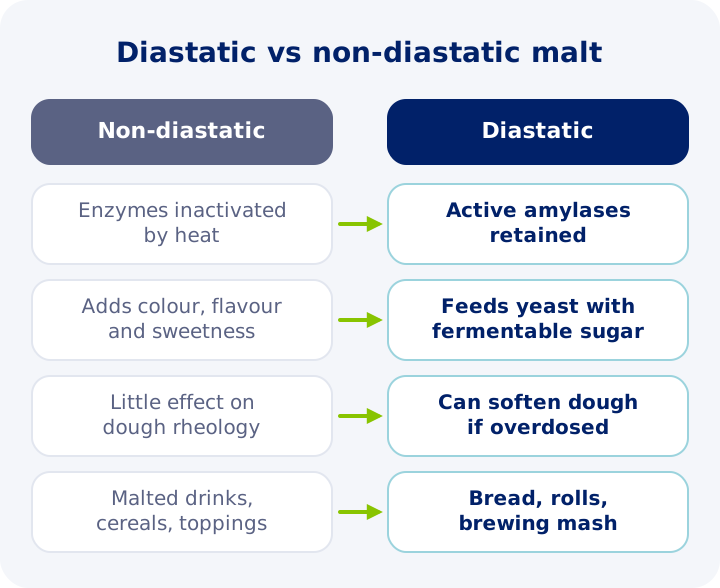
Diastatic malt flour adds active amylases to a dough. They convert damaged starch into sugars that feed yeast and help crust colour. This is useful when flour is naturally low in amylase. Overdosing, however, can produce a sticky, gummy crumb, because cereal alpha-amylase survives well into baking.
Non-diastatic malt, including most malt extracts for drinks and many dark malts, has no meaningful enzyme activity. It is used purely for flavour, colour and sweetness.
Malt in brewing, baking and foods
Brewing and distilling
In the mash, malt enzymes convert starch to fermentable sugars, mainly maltose. Malt also provides colour, flavour, body and nitrogen for yeast. When brewers use unmalted adjuncts or less well-modified malt, added enzymes such as beta-glucanase can help with wort viscosity. Our article on enzymes in the food and beverage industry covers brewing enzymes in more detail.
Baking
Bakers use malt flour, malt extract or both. Many now use standardised enzymes from our bakery enzymes range instead of, or alongside, diastatic malt. Fungal amylase gives consistent activity from lot to lot and is inactivated at a lower temperature during baking, so it carries less risk of gummy crumb. Malt remains popular where its flavour and colour are part of the product’s identity. For a closer look at the enzyme options, read our comparison of fungal diastase and alpha-amylase.
Malted drinks, cereals and other foods
Malt extract and malt flour flavour malted milk drinks, breakfast cereals, biscuits and confectionery. Malt vinegar is brewed from malted barley. In these uses, malt’s role is mainly flavour, colour and sweetness.
Tip: When replacing diastatic malt with an enzyme, match starch-degrading activity in trials first, then add non-diastatic malt extract if you need to keep the malt flavour and colour.
Specifying malt for production
Malt is a natural product, so its properties vary with grain variety, harvest and malting conditions. A clear specification keeps results consistent:
- Diastatic power: the starch-degrading enzyme activity, critical for diastatic malt and brewing base malt.
- Colour: usually given in EBC or Lovibond units, important for crust colour and beer colour.
- Moisture and extract: moisture affects storage life, while extract shows how much soluble material the malt can deliver.
- Particle size: for malt flour, this affects how evenly it disperses in flour blends.
Bakers should also look at the falling number of their flour, which reflects its natural amylase level. Flour that is already high in amylase needs little or no diastatic malt, while low-amylase flour benefits more from added malt or fungal amylase.
What malt contributes nutritionally
Malt is mainly carbohydrate, with starch, maltose and other sugars, plus some protein. Whole malt and malt flour also contain dietary fibre and the B vitamins and minerals naturally present in the grain. Malt extract is concentrated mostly into sugars. Any nutrition claim on a malt-based product should be based on its own analysis and comply with local labelling rules.
Working with Enzyme Bioscience
Enzyme Bioscience supplies fungal amylase, beta-glucanase and other enzymes for bakery and brewing from its FDA-registered, GMP and ISO 9001:2015 plant in Surat. Our ENZYVIVE® service can build a blend to match the performance of your current malt. Request samples, a TDS or a CoA to start a trial.
Frequently asked questions
Most malt is made from barley, but wheat, rye, oats, sorghum and millets such as finger millet (ragi) are also malted. The grain is soaked, allowed to sprout under controlled conditions and then dried in a kiln.
Diastatic malt still contains active starch-degrading enzymes, mainly amylases, so it can convert starch into sugars in a dough or mash. Non-diastatic malt has been heated enough to inactivate those enzymes and is used for colour, flavour and sweetness.
Malt supplies the starch that becomes fermentable sugar and the enzymes that make that conversion happen during mashing. It also contributes colour, flavour, body and nutrients for yeast. The choice of malt types shapes the style of the beer.
In many bread formulations it can. Fungal amylase gives standardised activity and is inactivated earlier in baking, which lowers the risk of a sticky crumb. Some bakers still use malt for its flavour and colour, sometimes together with enzymes.
Malt extract is made by mashing malt in water so its enzymes convert the starch to sugars, then concentrating the liquid into a syrup or drying it to a powder. It is used in bakery, malted drinks, breakfast cereals and brewing, and it can be diastatic or non-diastatic.