In this article
Digestive enzymes break carbohydrates, proteins and fats into units small enough for the body to absorb. Which enzyme is “best” depends on which food component a product is meant to help with, so this guide maps the main digestive enzymes to their substrates and sources. It then covers what formulators weigh up when building a blend that may support comfortable digestion.
How digestion depends on enzymes
The body makes its own digestive enzymes in the salivary glands, stomach, pancreas and the lining of the small intestine. Each one works on a specific type of chemical bond, so digestion is a relay. Starch is started in the mouth, protein is opened up in the acidic stomach, and most of the heavy work happens in the small intestine. There, pancreatic enzymes and enzymes on the intestinal lining finish the job.
Enzyme output is not the same for everyone. The best-known example is lactase: many adults produce much less of it after childhood, which is why lactose maldigestion is common. Diet, age and individual factors also play a part. Enzyme-rich foods and formulated enzyme products are used to complement the body’s own enzymes, not to replace normal digestion.
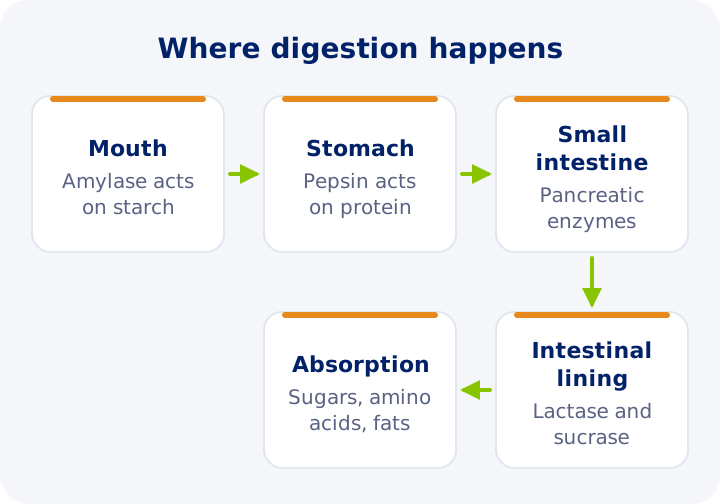
The core digestive enzymes and what they do
Amylase for starch
Amylases break the long glucose chains in starch into shorter dextrins and maltose. Humans produce amylase in saliva and the pancreas. For formulations, fungal amylase from Aspergillus oryzae is widely used because it is well characterised and works in mildly acidic conditions.
Proteases for protein
Proteases cut the peptide bonds that hold proteins together, releasing peptides and amino acids. Pepsin works in the stomach, and trypsin and chymotrypsin work in the small intestine. Plant proteases such as papain (papaya) and bromelain (pineapple), and microbial proteases, are common in supplements.
Lipase for fats
Lipases split triglycerides into fatty acids and glycerol. Fat digestion also relies on bile to emulsify fat into small droplets so lipase can reach it. Microbial lipases are often chosen for vegetarian formulations.
Lactase for milk sugar
Lactase breaks lactose into glucose and galactose. It is one of the most widely used digestive enzymes, both in dairy processing and in products taken with dairy foods. See our lactase for grade details.
Alpha-galactosidase for beans and pulses
Beans, lentils and some vegetables contain raffinose-family sugars that human enzymes cannot break down. When they reach the large intestine, gut microbes ferment them and produce gas. Alpha-galactosidase breaks these sugars down earlier in digestion.
Cellulase and other fibre enzymes
Humans do not make cellulase. Microbial cellulases and hemicellulases are sometimes added to broad-spectrum blends to act on plant cell-wall material, which can help release nutrients held inside plant cells.
| Enzyme | Substrate | Main products | Typical source for formulations |
|---|---|---|---|
| Amylase | Starch | Dextrins, maltose | Aspergillus oryzae fermentation |
| Protease | Proteins | Peptides, amino acids | Papaya, pineapple, microbial |
| Lipase | Fats (triglycerides) | Fatty acids, glycerol | Microbial fermentation |
| Lactase | Lactose | Glucose, galactose | Fungal or yeast fermentation |
| Alpha-galactosidase | Raffinose, stachyose | Simple sugars | Fungal fermentation |
| Cellulase | Cellulose | Shorter glucose chains | Fungal fermentation |
Food sources versus standardised enzymes
Several foods contain active enzymes. Pineapple contains bromelain, papaya contains papain and kiwifruit contains actinidin, all of which are proteases. Ripening fruits such as mango and banana contain amylases, and raw honey contains enzymes such as invertase. Fermented foods such as yoghurt, kefir, kimchi and sauerkraut also carry enzymes produced by their microbes.
These foods can be part of a varied, fibre-rich diet. There are limits, though:
- Activity varies: Enzyme content changes with variety, ripeness and storage.
- Heat inactivates enzymes: Cooking, canning and pasteurisation largely destroy enzyme activity.
- Amounts are unknown: Food labels do not declare enzyme activity.
Formulated enzyme ingredients solve these problems by declaring activity in defined units on the certificate of analysis (CoA). That is why manufacturers specify digestive blends by units, not by milligrams of powder.
What makes a digestive enzyme the best choice for a formulation
For a brand or formulator, “best” means the right enzyme, at the right activity, in a format that stays stable until the end of shelf life. Five questions help narrow the choice.
- Substrate: Which food component is the target? A product for dairy meals needs lactase; a product for bean-rich meals needs alpha-galactosidase. A general blend usually combines amylase, protease and lipase.
- Activity: How is activity declared? Each enzyme has its own assay and unit system, and units from different methods cannot be compared directly.
- pH behaviour: Where must it work? Fungal and microbial enzymes generally tolerate a broader pH range than pancreatic enzymes. Acid-sensitive enzymes may need enteric-coated tablets or capsules.
- Source: Does the source fit the market? Animal-derived enzymes such as pancreatin and pepsin are not suitable for vegetarian products. Microbial and plant enzymes are often preferred, and Halal or Kosher status may be required.
- Stability: Will it stay stable? Enzymes lose activity with moisture and heat. Proteases can also degrade other enzymes in a blend, so low water activity and moisture-proof packaging matter.
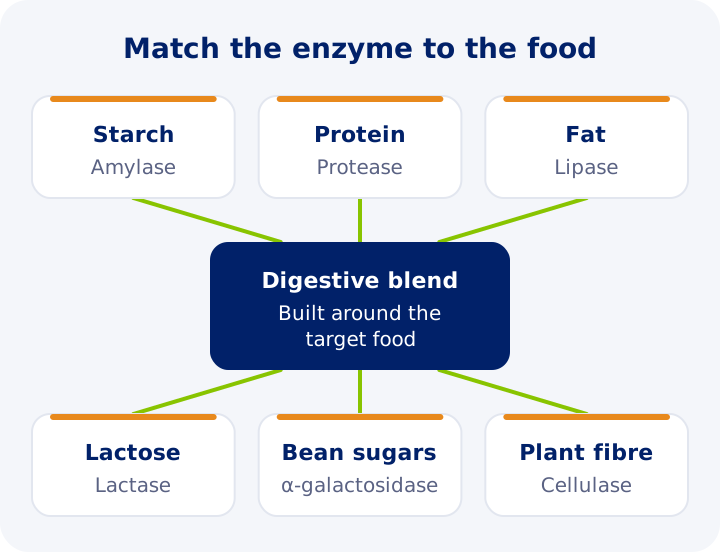
Tip: Write your specification in activity units for each enzyme and ask for the assay method. Two powders with the same weight can differ widely in activity.
Gut health is more than enzymes
Digestive enzymes are one part of a wider picture. Probiotics, which are live microorganisms, are often paired with enzymes in gut-health products because they play different roles. Dietary fibre, hydration and regular meals also matter. Our probiotics range covers the bacterial and yeast strains most often used alongside enzymes.
It is also important to be clear about limits. Over-the-counter digestive enzyme products are intended to support normal digestion. Persistent or severe digestive symptoms need medical assessment, and prescription pancreatic enzyme therapy is a separate category used under medical supervision.
Working with Enzyme Bioscience
We produce food- and pharma-grade digestive enzymes, including amylases, proteases, lipase, lactase and alpha-galactosidase, in our food enzyme range. Our team can also design a multi-enzyme formulation through our ENZYVIVE® custom-blend service. Request samples, a TDS or a CoA to start trials.
Frequently asked questions
Alpha-galactosidase is the enzyme most closely linked to beans and pulses. It breaks down raffinose and stachyose, sugars that humans cannot digest on their own and that gut microbes otherwise ferment. It is used in formulations that may support comfortable digestion of bean-rich meals.
Lactase splits lactose into glucose and galactose. It is used both to make lactose-free or reduced-lactose dairy products and in supplements taken with dairy foods by people who have difficulty digesting lactose.
Pineapple and papaya contain the proteases bromelain and papain, but the amount varies with ripeness, variety and processing, and heat during cooking or pasteurisation inactivates them. Formulated enzyme ingredients are standardised to a declared activity, which makes their performance more predictable.
It depends on the enzyme. Many fungal and microbial enzymes remain active over a broader pH range, while pancreatic enzymes such as pancreatic lipase are sensitive to acid and are often protected with an enteric coating. Formulators choose the source and dosage form with this in mind.
Yes. Enzymes act directly on food components, while probiotics are live microorganisms, so the two are often combined in gut-health formulations. Compatibility, moisture control and shelf-life testing are important when they share one product.