In this article
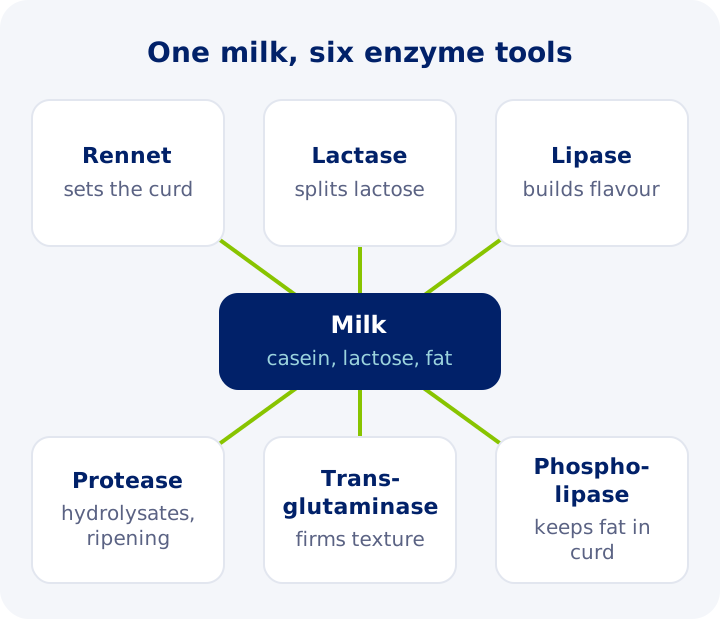
Milk is one of the most enzyme-friendly raw materials in food processing. Its proteins, sugar and fat each respond to a specific group of enzymes, which is why dairy plants use enzymes to set curd, build flavour, firm texture and remove lactose. This guide maps the main dairy enzymes to the jobs they do and the points to check before you buy.
Why dairy relies on enzymes
Cheese has been made with enzymes for centuries, long before anyone could name them. Rennet from calf stomachs was one of the first standardised enzyme preparations sold to industry. Today most dairy enzymes are produced by controlled fermentation, which gives more consistent activity and removes the dependence on animal tissue.
Enzymes suit dairy for three reasons. They work at the mild temperatures that protect milk quality. They act on one type of bond, so they change one property without disturbing the rest. And they are used in small amounts, usually followed by a heat step that inactivates them. For a dairy plant, that means precise control over texture and taste without harsh chemical treatments.
The dairy enzyme toolkit at a glance
Each enzyme in a dairy plant has a clear target. The table below links the most common ones to their substrate and typical use.
| Enzyme | Acts on | Main effect | Typical products |
|---|---|---|---|
| Rennet / coagulant | Kappa-casein | Sets milk into curd | Hard and soft cheese |
| Lactase | Lactose | Splits it into glucose and galactose | Lactose-free milk, yoghurt |
| Lipase | Milk fat | Releases flavour fatty acids | Italian-type cheese, EMC |
| Protease | Casein, whey protein | Forms peptides, softens body | Hydrolysates, ripened cheese |
| Transglutaminase | Milk proteins | Cross-links proteins | Yoghurt, cream cheese |
| Phospholipase | Phospholipids | Helps keep fat in the curd | Pasta filata cheese |
Coagulation: choosing a rennet or coagulant
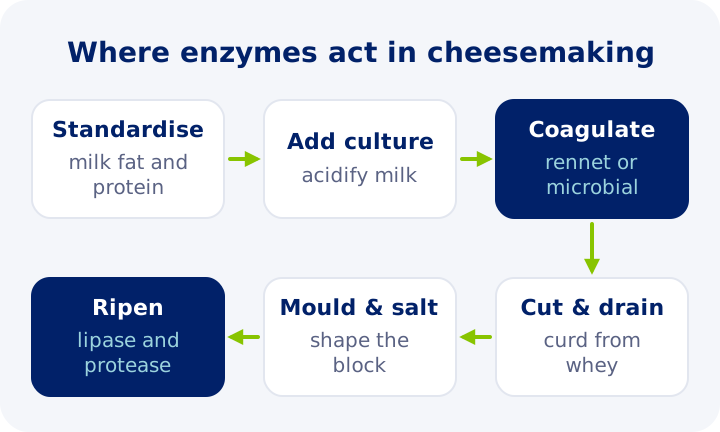
Coagulation is the step that turns liquid milk into cheese. Chymosin, the main enzyme in rennet, cuts kappa-casein at one specific bond. That cut removes the protective layer on casein micelles, and with calcium present the micelles join into a gel. The cheesemaker then cuts the gel to release whey.
Animal, microbial and fermentation-produced options
There are three broad sources of coagulant:
- Animal rennet: from calf or other ruminant stomachs, the traditional option.
- Microbial coagulants: from moulds such as Rhizomucor, which have a different protease profile and suit many fresh and short-ripened cheeses.
- Fermentation-produced chymosin, made by microorganisms carrying the chymosin gene. It is very specific and is widely used in long-ripened cheeses.
Microbial and fermentation-produced coagulants are not drawn from animal tissue, which matters for vegetarian, Halal and Kosher ranges. You can explore our rennet specifications and certification status before trials.
What to check before switching
A coagulant with more general protease activity can break down casein further during ripening. That may cause softer texture or bitterness in long-aged cheese. When you change coagulant, compare setting time, curd firmness at cutting, yield and flavour after the normal ripening period. Do not judge on setting time alone.
Flavour and ripening: lipases and proteases
Once the curd is formed, ripening builds most of the flavour. Two enzyme groups do most of that work.
Lipases, the first group, release free fatty acids from milk fat. Short-chain fatty acids give the sharp, piquant notes of some Italian-type cheeses. Lipases are also used to make enzyme-modified cheese (EMC), a concentrated cheese flavour for snacks, sauces and processed cheese. Food-grade lipases are selected for this work by their fatty acid profile, since each gives a different flavour.
Proteases, the second group, break casein into peptides and amino acids. These give savoury, rounded flavour and a smoother body. Controlled protease addition can shorten ripening for some cheese types, but too much activity creates bitter peptides. Our article on protease enzymes in food and feed covers protease classes in more detail.
Texture and yield: transglutaminase and phospholipase
Transglutaminase, often called a protein cross-linking enzyme, forms covalent links between glutamine and lysine in milk proteins. In yoghurt, this builds a firmer gel and helps reduce whey separation on the shelf. It can also improve the body of cream cheese and some dairy desserts. Because it changes texture strongly, it needs careful dose trials. Check the activity units on the TDS, as they vary between suppliers.
Phospholipase, by contrast, acts on the phospholipids around fat globules. In pasta filata cheeses such as mozzarella, it can help retain more fat in the curd during stretching. Better fat retention can mean less fat lost to the cooking water and better yield from each batch.
Tip: Run texture and yield trials over the full shelf life, not just on day one. Gel strength, whey separation and cheese melt can change during storage.
Lactose reduction
Lactase splits lactose into glucose and galactose. Dairies use it to make lactose-free milk and to reduce lactose in yoghurt, ice cream and flavoured milk. The split sugars taste sweeter than lactose, which helps when reformulating to lower added sugar. Our dedicated guide to lactase in dairy covers enzyme types, process routes and quality checks.
Practical points for dairy plants
A few rules apply to almost every dairy enzyme:
- Match the enzyme to your conditions: milk pH, temperature and holding time set how fast each enzyme works. Check the TDS for the active range before trials.
- Plan the inactivation step: pasteurisation or a later heat treatment normally inactivates added enzymes. Residual activity can keep changing texture or flavour in storage.
- Dose by activity, not weight: two products with the same name can have very different strengths. Use our enzyme dosage calculator to plan the trial range.
- Check documents early: confirm the CoA, allergen status and Halal, Kosher or vegetarian certification before scale-up, not after.
Clean-label thinking also favours enzymes. They can replace some stabilisers or modified starches when they build texture from the milk’s own proteins. The final label position still depends on local regulation in each market.
Working with Enzyme Bioscience
Enzyme Bioscience makes food enzymes at an FDA-registered, GMP and ISO 9001:2015 facility in Surat, with Halal, Kosher and FSSAI certifications. Our in-house R&D and QC labs can support dairy trials, and our ENZYVIVE® service can build a custom blend for your process. Request samples, a TDS or a CoA to start testing.
Frequently asked questions
The core enzyme is a coagulant such as rennet (mainly chymosin), which sets the milk into curd. Lipases and proteases are used for flavour development and ripening in some cheese types, and phospholipase may be used to improve fat retention in certain cheeses.
Microbial coagulants and fermentation-produced chymosin are not taken from animal stomachs, so they are widely used in cheese sold as suitable for vegetarians. Whether a product can carry a vegetarian, Halal or Kosher claim depends on the full supply chain and its certification, so check the documents for each lot.
Transglutaminase links milk proteins to each other, which builds a firmer gel. In set and stirred yoghurt it is used to improve body and reduce whey separation. The right level depends on the milk base and the texture target, so it should be set through trials.
It depends on the market and on how the enzyme is used. Many regulations treat enzymes that have no function in the finished food as processing aids, but the rules differ by country. Check the requirements of FSSAI or the relevant authority for each market you sell into.
Dose depends on enzyme activity, milk composition, temperature, pH and holding time. Start from the supplier's TDS, run small trials at your own conditions and confirm at plant scale. Our enzyme dosage calculator can help you plan the first trial range.