In this article
- What quality actually means
- Quality looks different by ingredient type
- The hidden cost of cheaper ingredients
- How quality pays off
- Fitness for purpose, not the most expensive grade
- A practical supplier qualification process
- Questions to ask before switching to a cheaper grade
- Keeping quality high after approval
- Working with Enzyme Bioscience
Premium brands in pharmaceuticals, nutraceuticals and food often pay more for their ingredients, and it is not because they enjoy higher costs. They have learned that the ingredient decides whether the final product works, passes testing and keeps its promise on the label. This article explains what ingredient quality really means for enzymes and probiotics, where the hidden costs of cheaper grades lie, and how to qualify suppliers so quality becomes a measurable decision.
What quality actually means
“High quality” is too vague to buy against. For bioactive ingredients such as enzymes and probiotics, quality breaks down into six measurable attributes, each of which can be written into a specification.
| Attribute | What to ask for | Why it matters |
|---|---|---|
| Identity | Source organism, strain designation, ID tests | Ensures you get the stated ingredient |
| Activity or count | Units per gram, or CFU at expiry | Drives the dose and the label claim |
| Purity | Microbial limits, heavy metals, contaminants | Protects safety and compliance |
| Stability | Real-time data in relevant conditions | Keeps potency through shelf life |
| Consistency | Batch history, tight specification ranges | Makes production predictable |
| Documentation | TDS, CoA, certifications | Supports audits and customer claims |
Identity comes first. A protease sold under a generic name may come from a plant, animal or microbial source, and these behave differently in pH, temperature and substrate range. For probiotics, effects are generally strain-specific, so the strain designation matters as much as the species name.
Activity is the attribute most often misunderstood. Enzyme activity is measured in defined units under a stated assay method, so two products with the same number on paper may not be comparable if the methods differ. Always compare like with like, and confirm activity in your own process.
For pharmaceutical customers, grade matters as well. Pharmacopoeial grades, such as Papain IP/USP or Serratiopeptidase IP, meet published monographs that define identity, assay and purity tests. That shared standard simplifies a pharmaceutical company’s own release testing.
Quality looks different by ingredient type
The six attributes apply everywhere, but their weight changes with the ingredient and the end use.
- Food and nutraceutical enzymes: activity under the conditions of the customer’s process matters most. An enzyme with high activity at its assay pH may perform poorly if the product or process runs at a different pH or temperature.
- Probiotic strains: the guaranteed count at the end of shelf life, strain identity and microbiological purity dominate. A high count at manufacture means little if it falls quickly in storage.
- Pharmaceutical enzymes: compliance with the relevant monograph, full batch documentation and consistent impurity profiles come first, because the customer’s own regulatory filings depend on them.
- Custom blends: uniform mixing and consistent ratios between components become an extra quality attribute, checked on every batch.
Writing these priorities into the specification makes quality a shared, testable expectation rather than a matter of opinion.
The hidden cost of cheaper ingredients
Price per kg is the number on the invoice, so it gets the attention. But it is only the visible tip of the total cost.
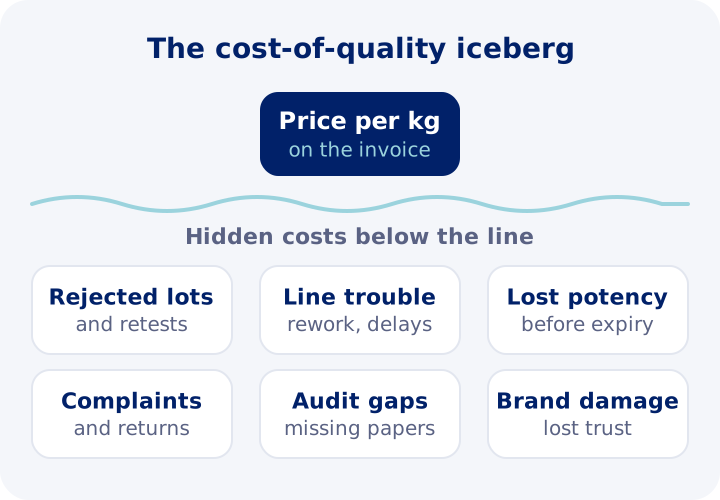
Below the waterline sit costs that rarely appear on the same spreadsheet:
- Rejected lots and retests when incoming material fails specification.
- Line trouble, such as poor flow, caking or inconsistent blending, causing rework and delays.
- Lost potency, where activity or viable count falls below the label claim before expiry.
- Complaints and returns when the finished product underperforms.
- Audit gaps, where missing or inconsistent supplier documents hold up approvals.
- Brand damage, which is the hardest cost to measure and the slowest to repair.
A low-priced ingredient with variable activity also forces a formulator to dose higher to be safe. That overage can erase the price advantage entirely. Our article on nutraceutical ingredient instability explains how to compare offers on cost per active dose instead.
How quality pays off
The return on better ingredients shows up in four places.
Reliable products and label claims
When activity and counts are consistent and stable, the finished product delivers what the label states throughout its shelf life. That protects both the consumer experience and the brand’s compliance position, and it allows overages to be set tightly rather than generously.
Smoother manufacturing
Consistent particle size, moisture and activity mean fewer adjustments on the line. Production planning becomes predictable, and QC spends less time investigating out-of-specification results. Over a year, the saved investigation time and avoided rework are often worth more than the price difference between grades.
Easier audits and market access
Complete, consistent documentation shortens supplier approval and customer audits. Certifications such as GMP, ISO 9001:2015, Halal, Kosher and FSSAI can also open markets and customer segments that require them.
A defensible premium position
Premium pricing needs something real behind it. Brands that can show named strains, standardised activity and batch-by-batch testing give buyers and professionals a concrete reason to choose them, and competitors find those facts harder to copy than a marketing slogan.
Fitness for purpose, not the most expensive grade
Paying for quality does not mean buying the highest grade for every use. A pharmacopoeial enzyme is essential in a regulated medicine, but a food or technical grade may be entirely appropriate in a process aid where the enzyme is used under controlled conditions. Over-specifying adds cost without adding value.
The better question is what the application needs. Start from the finished product: its regulatory category, its label claims, its shelf life and the conditions in your process. Then set the specification at the level that reliably meets those needs, with a margin for normal variation. Premium brands are usually not paying for luxury; they are paying for certainty that the ingredient will meet that specification every time.
This is also where a capable supplier adds value. A technical team that understands your process can often recommend a grade, form or blend that meets the need at a sensible cost, rather than simply quoting the most or least expensive option.
A practical supplier qualification process
Quality becomes repeatable when supplier approval follows a defined process rather than relying on reputation.
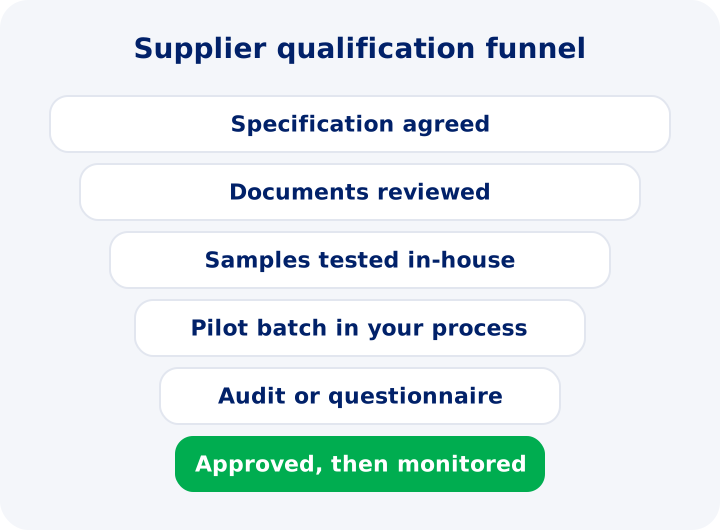
- Agree the specification: identity, activity or count, purity limits, physical properties and packaging.
- Review documents: TDS, CoA, stability data, certifications and regulatory statements.
- Test samples in-house using your own methods, not only the supplier’s.
- Run a pilot batch in your real process and check finished-product performance.
- Complete an audit or supplier questionnaire, depending on the risk of the ingredient.
- Approve, then monitor: track CoAs, test incoming lots periodically and review performance at least once a year.
Tip: Compare suppliers on the same assay method. If methods differ, test both samples side by side in your own lab or process before drawing conclusions.
Questions to ask before switching to a cheaper grade
- Is the activity measured by the same method, and does it hold up in our process?
- What stability data exists, under which conditions and in which pack?
- How consistent have the last several batches been against specification?
- Which certifications does the site hold, and are they current?
- How will the change affect our label claims, our substantiation file and our customers’ approvals?
- What is the cost per effective dose once overage, losses and testing are included?
If the answers are unclear, the lower price is probably not a saving.
Keeping quality high after approval
Approval is the start of the relationship, not the end. Quality can drift when a supplier changes a raw material, a fermentation step or a packaging component, so build ongoing checks into your system:
- Require advance notice of significant changes in your supply agreement.
- Trend CoA results over time rather than checking each one in isolation.
- Re-test incoming lots periodically with your own methods, with frequency based on risk.
- Review complaints and production issues for patterns that point back to an ingredient.
- Hold an annual supplier review covering performance, documents and certifications.
These steps take little time when they are routine, and they catch problems while they are still small.
Working with Enzyme Bioscience
Founded in 2012, Enzyme Bioscience manufactures more than 100 enzymes and probiotic strains in Surat, Gujarat, in an FDA-registered, GMP facility with in-house R&D and QC labs. Our pharmaceutical enzymes and other ranges are supplied to customers in 21 countries, and our certifications include ISO 9001:2015, Halal, Kosher and FSSAI. To qualify us as a supplier, request samples, TDS and CoA.
Frequently asked questions
For enzymes it mainly means correct identity, specified activity, low contaminants, stability and consistent batches. For probiotics it also means a guaranteed viable count at the end of shelf life and a clearly identified strain. All of these should be backed by specifications and certificates of analysis.
Pharmacopoeial grades meet published monographs that define identity, assay and purity tests. Pharmaceutical manufacturers often require them because the tests are standardised and recognised by regulators, which simplifies their own quality control.
Sometimes, for example in technical applications where purity requirements are lower. The decision should rest on fitness for purpose and cost per effective dose, confirmed by pilot trials, rather than price per kg alone.
Ask for the specification, a recent certificate of analysis, the technical data sheet, stability data, allergen and GMO statements where relevant, and copies of quality certifications. For regulated products you may also need a supplier questionnaire or an audit.
Our facility in Surat, Gujarat is FDA-registered and GMP-compliant, and we hold ISO 9001:2015, Halal, Kosher and FSSAI certifications. In-house R&D and QC labs test our enzymes and probiotic strains, and TDS and CoA are available on request.