In this article
- Why polysaccharides cause trouble in sugar processing
- Matching the enzyme to the problem
- Dextranase: dealing with deteriorated cane
- Alpha-amylase: removing cane starch
- Beet factories and refineries
- Invertase: making invert sugar
- The efficiency and sustainability case
- Choosing and dosing sugar enzymes
- Working with Enzyme Bioscience
Sugar mills handle huge volumes of juice under tight time pressure, so anything that slows filtration, evaporation or crystallisation costs money. Two natural polysaccharides, dextran and starch, are common causes of these slowdowns. This article explains how enzymes tackle them in cane processing, and how invertase is used to make invert sugar syrups.
Why polysaccharides cause trouble in sugar processing
A sugar mill’s job is to recover as much sucrose as possible as clean crystals. Sucrose itself is easy to crystallise. The trouble comes from larger carbohydrate molecules that travel with it:
- Dextran: forms when bacteria, mainly Leuconostoc species, grow on cut or damaged cane. The longer the delay between cutting and crushing, the more dextran forms.
- Starch: comes from the cane plant itself. Its level varies with cane variety, maturity and the amount of tops and leaves in the cane supply.
Both raise the viscosity of juice and syrup. That slows filtration and boiling, and holds back sucrose that would otherwise crystallise, so more is lost in molasses. Dextran also changes crystal shape, giving elongated crystals that are harder to separate and wash.
Matching the enzyme to the problem
| Problem | Cause | Enzyme | Typical dosing point |
|---|---|---|---|
| High viscosity, slow filtration | Dextran from stale cane | Dextranase | Mixed juice or syrup |
| Elongated, poorly washing crystals | Dextran | Dextranase | Mixed juice or syrup |
| Slow filtration and boiling | Native cane starch | Heat-stable alpha-amylase | Clarification or evaporation |
| Need for a non-crystallising syrup | Sucrose | Invertase | Syrup production |
Dextranase: dealing with deteriorated cane
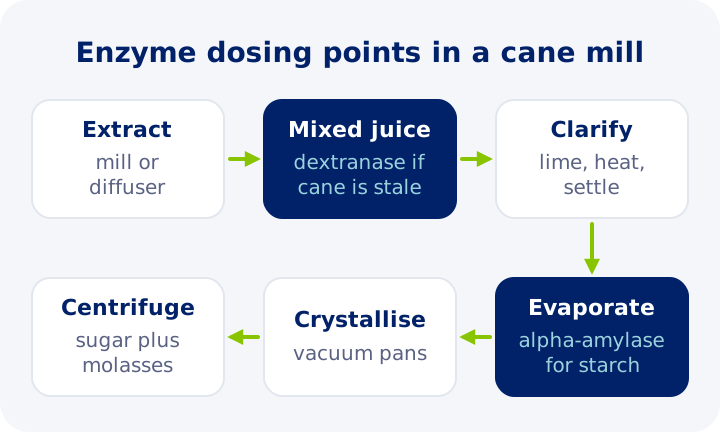
Dextranase breaks dextran into smaller, less viscous fragments. Mills usually add it to mixed juice or to syrup in the later evaporator stages, where temperature and retention time suit the enzyme. Some mills apply it routinely during periods when cane quality is known to suffer, such as after rain, burning or harvest delays. Others dose only when dextran tests rise.
The benefits follow directly from lower viscosity: faster filtration, easier boiling, better crystal shape and less sucrose lost in molasses. Dextranase works best on dextran that is still in solution, so early dosing on fresh problems is usually more effective than trying to fix heavy syrup later.
Prevention still matters
Enzymes treat the symptom. The cause is bacterial growth on cut cane and in the mill. Short cut-to-crush times, clean cane supply and regular mill sanitation all reduce dextran formation. Good practice and enzyme use work together.
Alpha-amylase: removing cane starch
Native cane starch enters the juice during extraction. Some is removed during clarification, but much passes through to evaporation and crystallisation. A heat-stable alpha-amylase breaks the starch into soluble dextrins and sugars, which reduces viscosity and helps filtration and boiling.
The enzyme must tolerate the high temperatures of clarification and evaporation, which is why heat-stable bacterial amylases are used. Dosing in the evaporator is common, as temperature and residence time there suit these enzymes. Lower starch in raw sugar is also valued by refiners, since starch can slow their filtration.
Tip: Measure dextran and starch in juice and raw sugar regularly. Trends show when cane quality is slipping and help you time enzyme dosing rather than dosing at a fixed rate all season.
Beet factories and refineries
Dextran is not only a cane problem. Sugar beet that has been damaged, for example by frost followed by thawing, or stored too long in warm conditions can also develop dextran. Beet factories facing this use dextranase in a similar way, with dosing points and doses set by trial.
Refineries meet these polysaccharides at second hand. Dextran and starch carried over in raw sugar can slow the filtration of melt liquor and affect the quality of refined sugar. This is one reason refiners often set limits for dextran and starch in the raw sugar they buy. Some refineries also use amylase on melt liquor to deal with residual starch. In both cases, good testing of incoming material helps decide whether enzyme treatment is needed.
Invertase: making invert sugar
Invertase splits sucrose into its two building blocks, glucose and fructose. The mixture is called invert sugar.
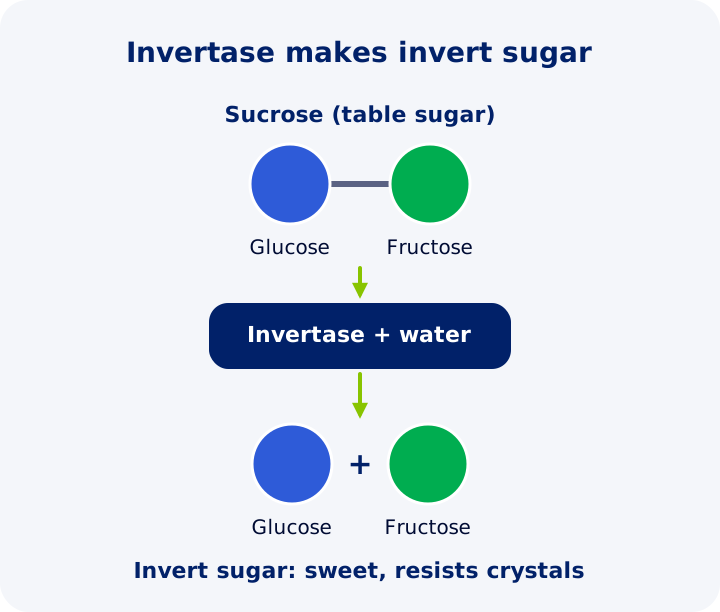
Invert sugar syrups have useful properties:
- They taste sweeter than the same amount of sucrose.
- They resist crystallisation, keeping syrups and fillings smooth.
- They hold moisture, which helps keep baked goods and confectionery soft.
Invert sugar can also be made with acid. The enzymatic route runs at milder temperatures and generally produces less colour and fewer by-products, which suits light-coloured syrups. A classic confectionery use is in soft-centred chocolates, where invertase added to a firm sugar centre slowly turns it into a liquid filling after enrobing.
The efficiency and sustainability case
Enzymes support a more efficient sugar operation in several ways:
- Higher recovery: lower viscosity means better exhaustion of molasses and less sucrose lost.
- Steadier throughput: fewer slowdowns in filtration, evaporation and centrifuging.
- Better sugar quality: improved crystal shape and lower dextran and starch in the product.
- Fewer chemical aids: specific enzyme action can reduce reliance on some processing chemicals.
The actual benefit in any mill depends on cane quality, process design and how well enzyme dosing is matched to the problem. Run trials and track results against clear measures such as dextran level, filtration rate and molasses purity.
Choosing and dosing sugar enzymes
Dosage depends on dextran or starch level, temperature, pH and retention time, so there is no single correct dose. Start from supplier data, run trials and adjust to your test results. Our enzyme dosage calculator can help plan the first trial range.
For the chemistry of starch-degrading enzymes in more depth, see our guide to enzymes in starch processing.
Working with Enzyme Bioscience
Enzyme Bioscience supplies dextranase, amylases and other food enzymes from its FDA-registered, GMP and ISO 9001:2015 plant in Surat, and serves customers in 21 countries. Our R&D team can support mill trials and documentation. Request samples, a TDS or a CoA to get started.
Frequently asked questions
Dextran is a polysaccharide made by bacteria, mainly Leuconostoc, when cut or damaged cane waits too long before crushing. It raises juice and syrup viscosity, slows filtration and boiling, distorts sugar crystals and increases sucrose lost to molasses. Refiners may also penalise raw sugar with high dextran.
It is commonly added to mixed juice or to syrup in the later stages of evaporation. The best point depends on temperature, retention time and where the dextran problem appears. Mills usually confirm the dosing point and dose through trials while monitoring dextran levels.
Sugarcane contains some native starch, which passes into the juice. Starch increases viscosity, slows filtration and crystallisation, and can be carried into raw sugar. A heat-stable alpha-amylase added during clarification or evaporation breaks it down into soluble dextrins and sugars.
Invert sugar is a mixture of glucose and fructose made by splitting sucrose. Invertase does this under mild conditions. The resulting syrup is sweeter than sucrose, holds moisture and resists crystallisation, so it is used in confectionery, bakery fillings and beverages.
No. Enzymes reduce the impact of dextran and starch, but the best results come from preventing them where possible. Short delays between cutting and crushing, clean cane and regular mill sanitation all limit dextran formation, so less enzyme is needed.