In this article
Fungal diastase is one of the most widely used starch-digesting ingredients in Indian digestive formulations. It is made by fermentation of the mould Aspergillus oryzae, and its main activity is alpha-amylase. This article explains how fungal diastase aids digestion, how pharmacopoeial-grade material is produced and tested, and what formulators should check when they put it into a finished product.
What fungal diastase is
“Diastase” is one of the oldest names in enzyme science. It was first used in the 1830s for the starch-digesting activity extracted from malted barley. Today, fungal diastase refers to an amylase preparation produced by Aspergillus oryzae, the same mould traditionally used to make koji for soy sauce and sake.
The principal enzyme in fungal diastase is alpha-amylase. It cuts the alpha-1,4 links inside starch chains, turning starch into shorter dextrins and the sugars maltose and maltotriose. The pharmacopoeial grade, Fungal Diastase IP, is defined by the Indian Pharmacopoeia monograph, which sets its identity, activity and quality requirements.
How fungal diastase aids digestion
Starch digestion begins with amylase in saliva and continues in the small intestine with amylase from the pancreas. Fungal diastase adds more of the same type of activity. In a formulation, it starts working on starch in the meal so that more of it is broken into smaller pieces that the intestine’s own enzymes can finish.
This is why fungal diastase is used in formulations that may support the digestion of starchy, carbohydrate-rich meals. As with any over-the-counter digestive enzyme, claims should stay functional, such as “supports carbohydrate digestion”. They should never suggest that the product cures, treats or prevents a disease.
Fungal amylase works best in mildly acidic conditions and loses activity in strongly acidic conditions. Formulators therefore think about where the enzyme will act and how the dosage form and partner ingredients affect it.
Because it is made by a mould rather than taken from animal tissue, fungal diastase also suits vegetarian formulations, unlike pancreatin or pepsin. Halal and Kosher status should still be confirmed for the specific grade and carrier.
How activity is expressed
Pharmacopoeial activity is measured with the monograph’s own assay, which tests how much starch the enzyme converts under defined conditions. Food-grade fungal amylase is often declared in other units, such as SKB, so the numbers cannot be compared directly. Set label claims, overages and incoming checks with the same method your supplier uses to release the batch. Otherwise apparent losses may simply reflect a change of method.
From fermentation to IP-grade powder
Making a consistent pharmaceutical enzyme depends on control at every stage. The general sequence is shown below.
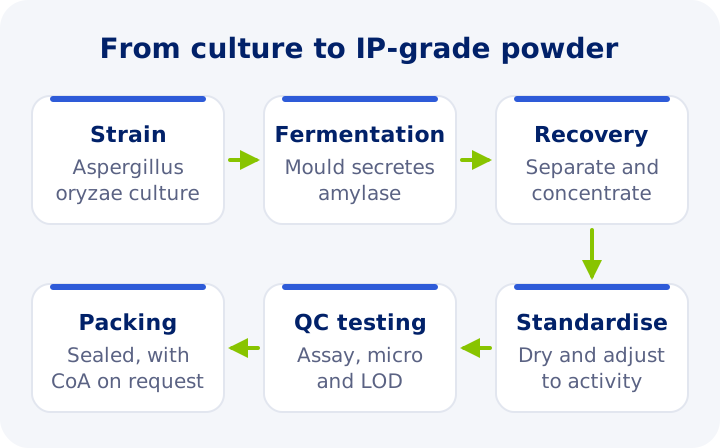
- Strain and culture: A selected Aspergillus oryzae strain is grown under controlled conditions.
- Fermentation: The mould secretes amylase into its growth medium as it grows.
- Recovery: The enzyme is separated from the biomass and concentrated.
- Standardisation: The concentrate is dried and blended with a suitable carrier to reach the target activity.
- Quality control: Each batch is tested against the monograph and the agreed specification.
- Packing: The powder is sealed in moisture-protective packaging, with a CoA available on request.
Formulating with fungal diastase
Fungal diastase appears in several dosage forms. Each one creates different challenges for keeping enzyme activity stable until the end of shelf life.
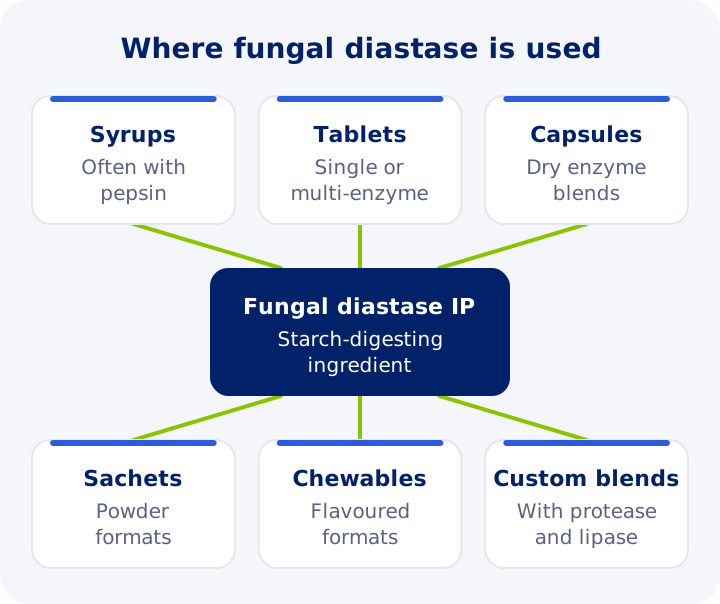
| Dosage form | Typical partners | Key formulation point |
|---|---|---|
| Syrup | Pepsin | Water, pH and temperature drive activity loss |
| Tablet | Pepsin, pancreatin | Compression heat and moisture during granulation |
| Capsule | Protease, lipase | Hygroscopic powder; control humidity during filling |
| Sachet or powder | Food-grade carriers | Moisture-proof pack after opening |
| Chewable | Flavours, sweeteners | Mild processing and low water activity |
Syrups
Liquid formats are the most demanding because enzymes are less stable in water. Syrup developers usually control pH, use preservatives that are compatible with enzymes and run real-time and accelerated stability studies. Where activity declines over shelf life, a justified overage at manufacture may be needed.
Tablets and capsules
Dry formats protect enzyme activity better, but heat and moisture during granulation, drying and compression can still cause losses. Direct compression or dry granulation is often preferred. Capsule filling should take place under controlled humidity because enzyme powders absorb moisture.
Combinations
When fungal diastase is combined with proteases such as pepsin or papain, the protease can slowly degrade the amylase, especially in liquids. Compatibility should be checked in the final formula rather than assumed.
Tip: Run stability studies in the exact pack you plan to sell. Bottle material, headspace and closure all affect how much moisture reaches the enzyme.
Quality checks to ask your supplier for
A reliable supply of fungal diastase is about consistency from batch to batch. Before you approve a source, ask for:
- Activity: assayed by the monograph method, with results on the CoA.
- Identity and appearance: confirming the material matches the specification.
- Loss on drying: a measure of moisture, which affects stability.
- Microbial limits: including tests for specified pathogens required for oral products.
- Documentation: TDS, CoA, storage conditions and a stated retest or expiry period.
It is also worth asking how the supplier handles changes to strain, process or carrier, and how much notice they give.
Beyond pharmaceuticals
The same type of fungal amylase is used outside medicine in food and feed grades. In baking it provides sugars for yeast and improves dough handling. In starch processing it helps produce maltose-rich syrups, and in feed it supports starch digestibility. These grades are specified for their own uses and are not interchangeable with IP material in a medicine, even when the enzyme is similar.
For a technical comparison of fungal diastase with bacterial alpha-amylase, see Fungal Diastase vs Alpha-Amylase.
Working with Enzyme Bioscience
We manufacture Fungal Diastase IP alongside pepsin, papain, pancreatin and other pharmaceutical enzymes in our GMP facility in Surat. We can also prepare multi-enzyme premixes through our ENZYVIVE® custom-blend service. Request a sample, TDS or CoA to begin your formulation work.
Frequently asked questions
Fungal diastase is used mainly as a starch-digesting ingredient in digestive formulations such as syrups, tablets and capsules. It breaks starch into dextrins and maltose and may support the digestion of carbohydrate-rich meals. It is also used in food processing in non-pharmacopoeial grades.
It is produced by fermentation of the mould Aspergillus oryzae, which secretes amylase into its growth medium. The enzyme is then recovered, concentrated, dried and standardised to a defined activity.
IP grade means the material is made and tested to meet the Indian Pharmacopoeia monograph for fungal diastase. The monograph sets the identity, activity and quality tests a batch must pass, and the results are reported on the certificate of analysis.
Fungal diastase acts on starch and pepsin acts on protein, so together they cover two major food components. This combination is common in digestive syrups and tablets in India. Formulators must check that both enzymes keep their activity in the chosen pH and format.
It should be kept in a tightly closed container in a cool, dry place, away from heat and humidity. Moisture and high temperature reduce enzyme activity over time, so the storage conditions on the TDS and CoA should be followed.