In this article
Enzymes play several distinct roles in modern medication. Some are active ingredients in their own right, such as digestive and proteolytic enzymes. Others are highly specialised biologic therapies. A growing number work behind the scenes as catalysts in drug manufacture. This article maps those roles and explains the quality requirements that make an enzyme fit for pharmaceutical use.
What makes an enzyme “pharmaceutical”
The same enzyme can be sold in food, feed and pharmaceutical grades. The pharmaceutical grade is defined by its specification. It is made and tested to a pharmacopoeial monograph, such as the Indian (IP), British (BP), United States (USP) or European (EP) Pharmacopoeia, and manufactured under GMP.
A monograph typically sets an identity test, an activity assay with a defined unit, limits for moisture and impurities, and microbial limits for oral products. A batch is fit for use in a medicine only if it meets every requirement, and the results are reported on its certificate of analysis. Our pharmaceutical enzymes range is built around these grades.
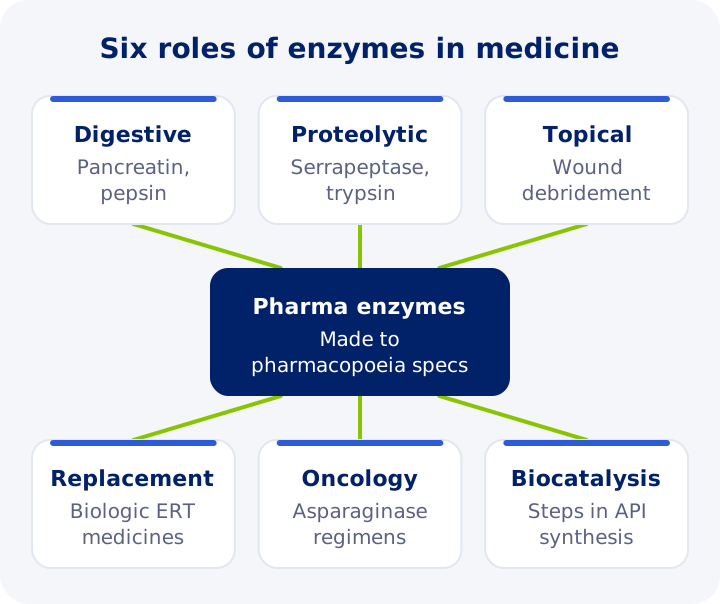
Six roles of enzymes in medicine
Digestive enzyme preparations
Digestive enzymes are the largest group by volume. Pancreatin is a mixture of amylase, lipase and protease from animal pancreas. Prescription pancreatic enzyme products are used under medical supervision for exocrine pancreatic insufficiency, for example in cystic fibrosis and chronic pancreatitis. Over-the-counter digestive preparations, especially common in India, use pepsin, fungal diastase, papain and pancreatin in syrups, tablets and capsules.
Oral proteolytic enzymes
Serratiopeptidase, trypsin-chymotrypsin and bromelain are proteolytic enzymes used in oral formulations in several markets. Their uses and regulatory status vary from country to country, so each manufacturer must check the position in its own target markets. Formulators should also confirm which assay and unit their pharmacopoeia uses, because monographs can define activity differently. Our Serratiopeptidase IP is supplied to the IP monograph.
Topical enzymes
Proteolytic enzymes such as collagenase are used in ointments for enzymatic wound debridement. These are regulated medicinal products, and the enzyme grade and formulation must meet the relevant authority’s requirements.
Enzyme replacement therapies
For some rare inherited disorders, the body lacks a working enzyme. Enzyme replacement therapies (ERT) supply a recombinant version of the missing enzyme by infusion. Approved ERT medicines exist for conditions such as Gaucher disease and Pompe disease. These are complex biologic medicines made by specialised biopharmaceutical manufacturers and used under specialist care.
Enzymes in oncology
Asparaginase is an established part of chemotherapy regimens for acute lymphoblastic leukaemia. It breaks down the amino acid asparagine, which these leukaemia cells depend on. Like ERT, it is a specialised biologic medicine.
Biocatalysis in API manufacture
Enzymes are increasingly used as catalysts in the synthesis of active pharmaceutical ingredients. Lipases, ketoreductases and transaminases can perform highly selective reactions, including making a single mirror-image form of a molecule. They do this under mild conditions, which can reduce steps, solvents and waste compared with traditional routes.
| Enzyme | Usual source | Role in medication |
|---|---|---|
| Pancreatin | Porcine pancreas | Multi-enzyme digestive preparations |
| Pepsin | Animal stomach lining | Digestive preparations, often with diastase |
| Fungal diastase | Aspergillus oryzae | Starch-digesting component |
| Papain | Papaya latex | Protein-digesting component |
| Serratiopeptidase | Bacterial fermentation | Oral proteolytic formulations |
| Trypsin-chymotrypsin | Animal pancreas | Oral and topical proteolytic preparations |
Animal, plant or microbial: choosing the source
Pharmaceutical enzymes come from three kinds of source, and each has trade-offs:
- Animal: pancreatin, pepsin and trypsin are obtained from animal tissue. They are long established and close to human digestive enzymes, but they are not suitable for vegetarian products and need documented controls on the source animals.
- Plant: papain and bromelain come from papaya and pineapple. They suit vegetarian products, but raw-material quality can vary with harvest and season.
- Microbial: fungal diastase, serratiopeptidase and microbial lipases are made by fermentation. They are vegetarian and scale well, and fermentation can be tightly controlled.
The source also affects Halal and Kosher status and the documents a drug manufacturer needs for its dossier. These typically include specifications, CoAs, origin statements and stability data. Agree what is needed with your supplier before you lock the formula.
The quality path for pharma-grade enzymes
Whether an enzyme comes from an animal, plant or microbial source, its route to release follows a similar pattern. That pattern ends with assay results on a CoA.
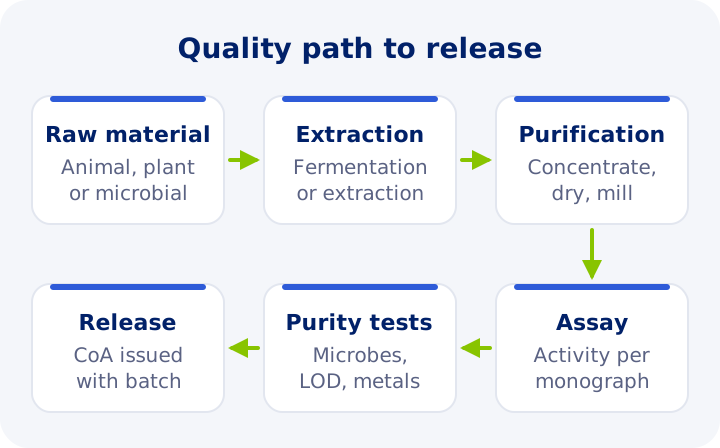
Buyers qualifying a new source usually review:
- Activity: assayed by the monograph method, with the unit clearly stated.
- Purity: loss on drying, residue on ignition and heavy-metal limits where the monograph sets them.
- Microbiology: total counts and absence of specified pathogens for oral products.
- Source and status: animal, plant or microbial origin, which affects vegetarian, Halal and Kosher suitability.
- Documentation: CoA, TDS, storage conditions, retest period and change-control practice.
Formulation challenges
Enzymes are proteins, so they are more fragile than most small-molecule drugs. They also respond to excipients: some surfactants, preservatives and metal ions reduce activity, so compatibility should be screened early. The main risks are:
- Moisture and heat: these cause steady loss of activity, so dry formats, low-humidity processing and protective packaging help.
- Stomach acid: acid-sensitive enzymes, especially pancreatic lipase, are often given an enteric coating.
- Protease attack: in combination products, proteases can degrade other enzymes, particularly in liquids.
- Activity overages: where activity declines over shelf life, a justified overage, based on stability data, keeps the product within its label claim.
Tip: Agree the assay method with your supplier before you start stability studies. Changing methods mid-programme makes results hard to compare.
For a detailed look at one of the most common digestive APIs, see our guide to fungal diastase and digestion.
Working with Enzyme Bioscience
We manufacture pharmacopoeial-grade enzymes, including pancreatin, pepsin, fungal diastase, papain, serratiopeptidase and trypsin-chymotrypsin, in our FDA-registered, GMP facility in Surat. Request samples, TDS and CoA to support your formulation and qualification work.
Frequently asked questions
Pharmaceutical enzymes are enzymes made to the quality standards required for medicines, usually defined by pharmacopoeial monographs such as IP, BP, USP or EP. They are used as active ingredients in digestive and proteolytic preparations and as catalysts in drug manufacture.
Pancreatin is a mixture of amylase, lipase and protease obtained from animal pancreas, usually porcine. Veg pancreatin is a blend of plant and microbial enzymes designed to provide similar activities for vegetarian formulations. The two differ in source, activity profile and regulatory status, so they are not automatically interchangeable.
It means the enzyme is made and tested to meet the monograph in the Indian, British, United States or European Pharmacopoeia. The monograph defines identity, activity assay, purity and microbial requirements. Manufacturers choose the grade required by their market's regulator.
Some enzymes, especially pancreatic lipase, lose activity in stomach acid. An enteric coating keeps the tablet or capsule contents intact in the stomach and releases them in the less acidic small intestine, where the enzymes are needed.
Enzymes act as biocatalysts in some API manufacturing steps. They can make specific chemical changes, including producing a single mirror-image form of a molecule, under mild conditions. This can reduce the number of steps, solvents and by-products compared with conventional chemistry.