In this article
Proteases are the enzymes that break down protein. They are among the most widely used enzymes in industry, with roles that run from biscuit dough and meat tenderising to protein hydrolysates and poultry feed. This guide explains how proteases work, how the main types differ, and how they are used across food and feed.
How proteases work
Proteins are long chains of amino acids joined by peptide bonds. A protease adds water across one of these bonds and splits the chain in two. Repeated cuts turn a large protein into smaller peptides and, eventually, free amino acids.
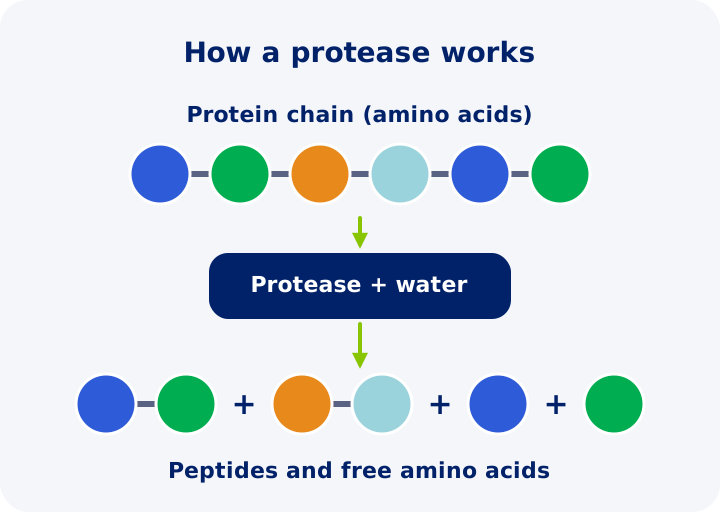
Two features define how a protease behaves:
- Where it cuts: endoproteases cut inside the chain and quickly reduce protein size. Exopeptidases trim amino acids from the chain ends and are often used to refine flavour and reduce bitterness.
- How far it goes: the degree of hydrolysis (DH) measures the share of peptide bonds broken. Low DH changes texture and solubility; high DH gives small peptides for flavour or nutrition.
The main protease types
Industrial proteases are grouped by their source and the pH range they prefer. The table gives a practical overview.
| Protease | Typical source | Preferred pH | Example uses |
|---|---|---|---|
| Acid protease | Aspergillus fungi | Acidic | Hydrolysates, brewing, feed |
| Neutral protease | Bacillus bacteria | Near neutral | Biscuit dough, meat, hydrolysates |
| Alkaline protease | Bacillus bacteria | Alkaline | Protein hydrolysates, feed |
| Papain | Papaya latex | Mildly acidic to neutral | Meat tenderising, brewing |
| Bromelain | Pineapple stem | Mildly acidic to neutral | Meat, protein processing |
Choose by process pH first, then by the cutting pattern and heat stability you need. A neutral protease such as our food-grade neutral protease suits many dough and meat processes. Plant proteases such as papain are valued for their broad specificity.
Proteases in the food industry
Bakery: dough relaxation
In biscuits, crackers and wafers, strong gluten makes dough elastic, so it shrinks after sheeting and gives uneven shapes. A protease weakens the gluten network, which makes the dough more extensible and easier to sheet. Proteases are used as an enzymatic alternative to chemical dough relaxers in many biscuit lines. In bread, where gluten strength is needed, proteases are used sparingly, if at all. Our bakery enzymes range covers both needs.
Meat and seafood: tenderising
Papain and bromelain break down muscle and connective tissue proteins, which softens tougher cuts. They are used in marinades, injection brines and tenderising powders. Over-treatment gives a mushy texture, so contact time and dose must be controlled, and cooking inactivates the enzyme.
Protein hydrolysates and flavour
Proteases convert soy, wheat, whey, casein and fish proteins into hydrolysates. Partial hydrolysis improves solubility and emulsifying power for drinks and nutrition products. Deeper hydrolysis gives savoury peptides and amino acids used in seasonings and bouillons. Bitterness is the main risk, which is why enzyme choice and the DH end point matter.
Brewing and dairy
In brewing, proteases can raise free amino nitrogen for yeast when adjuncts dilute the malt, and some are used to limit protein-related haze. In dairy, the coagulant chymosin is itself a highly specific protease, and other proteases contribute to cheese ripening.
Tip: Measure degree of hydrolysis or a related index, such as soluble nitrogen, at fixed times during trials. It gives a far more reliable end point than reaction time alone.
Proteases in animal feed
Animals do not digest all the protein in their diet. Some passes through undigested, wasting expensive ingredients and adding nitrogen to manure. Feed proteases help break down this residual protein in the digestive tract.
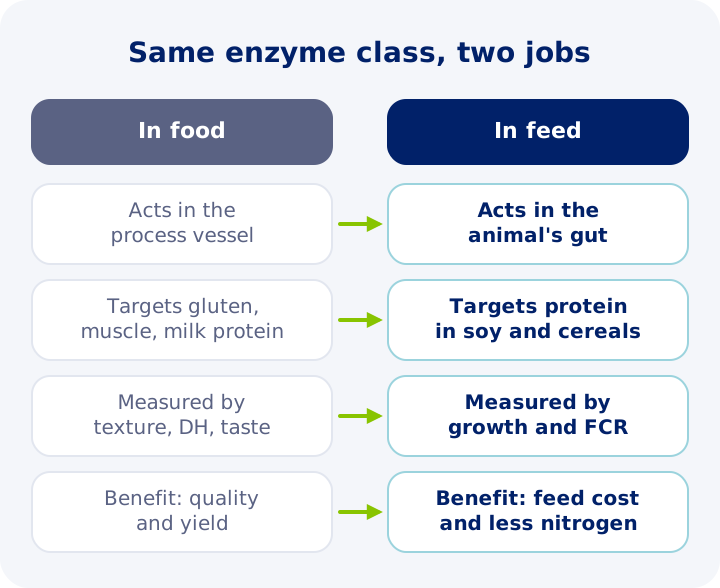
The benefits reported in poultry and pig nutrition fall into three groups:
- Digestibility: more of the dietary protein can be broken down and absorbed.
- Formulation flexibility: nutritionists can adjust protein ingredients while keeping performance targets.
- Lower nitrogen output: better protein use means less nitrogen excreted, which supports sustainability goals.
Feed proteases must survive feed processing, such as pelleting, and work in the pH conditions of the gut. Responses depend on species, age, diet and enzyme, so results should be confirmed in feeding trials. See our feed enzymes range for protease options alongside phytase, xylanase and other feed enzymes.
Troubleshooting protease processes
Most protease problems trace back to a few causes. Working through them in order usually finds the answer quickly.
Too little effect
Check the process pH and temperature first. If either sits outside the enzyme’s working range, activity falls sharply. Also check that no heat step comes too early and stops the enzyme before it has worked. Some raw materials, such as raw soybeans and other legumes, contain natural protease inhibitors that slow the reaction until they are reduced by heat treatment.
Too much effect
Mushy meat, sticky dough or weak gel structure usually means the dose was too high or contact time too long. Reduce one variable at a time, and make sure the stop step, such as cooking or baking, follows promptly.
Bitter or off-flavours
Bitterness points to the wrong enzyme or too high a degree of hydrolysis. Try a protease with a different cutting pattern, stop earlier, or add an exopeptidase step to trim bitter peptides.
Batch-to-batch variation
Protein content and quality vary between flour lots, meat cuts and soy batches. Record enzyme lot numbers against each batch and test raw material protein so you can separate enzyme effects from raw material effects.
Choosing and dosing a protease
Start with four questions:
- What pH and temperature does your process run at?
- Which protein do you need to change: gluten, muscle, soy, whey or a feed blend?
- What end point do you need: a texture change, better solubility, a target DH or digestibility?
- How will you stop the reaction: baking, cooking, pasteurisation or pelleting?
Activity units differ between suppliers, so compare products in your own trial. Dosage depends on substrate and process. Our enzyme dosage calculator can help set the first trial range.
Working with Enzyme Bioscience
Enzyme Bioscience offers acid, neutral, alkaline and plant proteases for food and feed, made at our FDA-registered, GMP and ISO 9001:2015 facility in Surat. Our R&D team can help with trial design, and our ENZYVIVE® service can combine proteases with other enzymes. Request samples, a TDS or a CoA to begin.
Frequently asked questions
The names describe the pH range where each enzyme works best. Acid proteases suit acidic processes, neutral proteases work near neutral pH, and alkaline proteases are most active in alkaline conditions. The right choice depends on the pH of your process and the protein you want to break down.
Bitterness comes mainly from peptides with exposed hydrophobic amino acids, which form as proteins are broken down. It depends on the protein source, the enzyme and the degree of hydrolysis. Choosing the right enzyme and stopping at the right point helps control it.
Proteases weaken the gluten network so the dough becomes more extensible and less elastic. Sheets and shapes then hold their dimensions with less shrinkage. Proteases are used as an enzymatic alternative to chemical dough relaxers in many biscuit formulations.
Feed proteases help break down dietary protein that the animal's own enzymes do not fully digest. This can improve protein digestibility, give nutritionists more flexibility with protein ingredients and reduce the nitrogen excreted in manure. Results depend on species, diet and enzyme.
No. Suppliers use different assays and units, often based on different substrates, pH and temperature. Two products with similar numbers may not be equivalent, so compare them in your own application trial rather than on the label value alone.