In this article
Cotton and other cellulosic fabrics have small fibre ends sticking out from the yarn surface. They make the fabric look dull and fuzzy, and during wear they tangle into pills. Bio-polishing uses cellulase enzymes to remove those fibre ends permanently. This guide covers how the process works, how to choose between acid and neutral cellulase and how to control the main risk, which is loss of fabric strength.
What bio-polishing does
Bio-polishing is a finishing treatment for cotton, viscose, lyocell, linen and their blends. Its main effects are:
- Less pilling. Removing loose fibre ends reduces the raw material for pills.
- Cleaner surface. Without fuzz scattering light, colours look clearer and brighter.
- Softer handle. The fabric feels smoother and drapes better.
- Permanent result. Softeners coat the surface and can wash out. Bio-polishing physically removes the fuzz, so the improvement lasts.
For lyocell, bio-polishing is also used to remove the fine surface fibrils that form during wet processing, which is known as defibrillation.
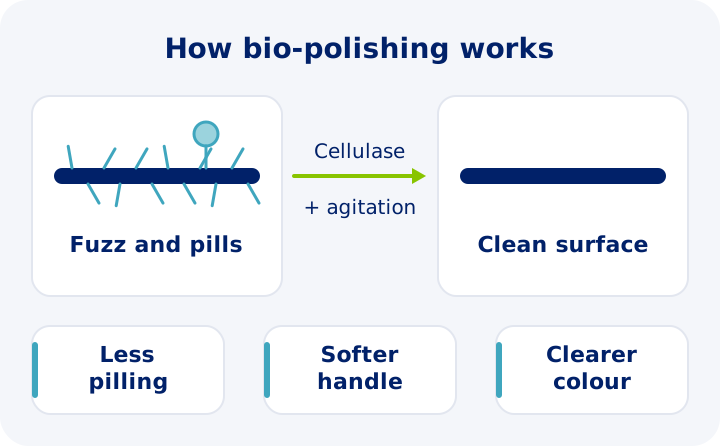
How cellulase removes fuzz
Cellulase enzymes hydrolyse the β-1,4 bonds in cellulose. Protruding fibre ends are the most exposed part of the fabric, so they are attacked first and weakened. Mechanical action in a jet, winch or drum then breaks them off and the loose material is rinsed away.
Both parts matter. Enzyme without enough agitation weakens the fuzz but leaves it attached. Strong agitation without enzyme simply raises more fuzz. Products for bio-polishing are usually rich in endoglucanase activity, which acts within the cellulose chain and weakens fibres quickly.
Acid and neutral cellulase
Two main families of cellulase are used. The choice depends on the fabric, the shade and the process route.
| Feature | Acid cellulase | Neutral cellulase |
|---|---|---|
| Working pH | Mildly acidic | Near neutral |
| Speed of action | Faster, more aggressive | Gentler, more controlled |
| Weight and strength loss | Higher risk | Lower risk |
| Backstaining on denim | More likely | Less likely |
| Typical fit | Strong effect on cotton wovens | Knits, dyed goods, delicate fabrics |
Acid cellulase for bio-polishing is a good choice when a strong, fast effect is needed. Neutral cellulase for bio-polishing is often preferred for knits, colour-sensitive goods and processes where pH adjustment is inconvenient.
A typical bio-polishing run
Exact conditions come from the product’s TDS, but the sequence below is common to most processes.
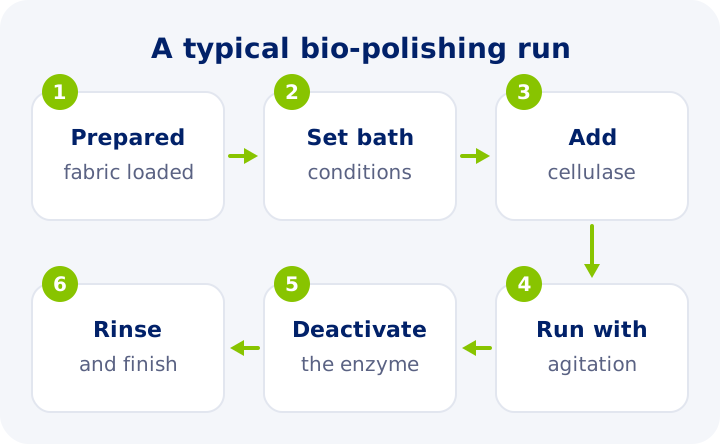
- Load prepared fabric. Fabric should be desized and scoured so the enzyme can reach the fibre surface evenly.
- Set bath conditions. Adjust pH with a suitable buffer and bring the bath to the recommended temperature.
- Add cellulase. Dose based on fabric weight and the effect required.
- Run with agitation. Hold for the set time with enough mechanical action to remove weakened fibres.
- Deactivate the enzyme. Raise the temperature or shift the pH as the TDS specifies, so the enzyme stops acting.
- Rinse and finish. Rinse out loose fibres, then apply softeners or other finishes.
Before or after dyeing?
Bio-polishing before dyeing gives a clean surface for level dyeing and avoids shade change. Bio-polishing after dyeing can alter the shade or cause backstaining, especially with acid cellulase, so it needs more careful testing. Some processes combine bio-polishing with other wet steps to save time and water; compatibility with dyes and auxiliaries must then be checked.
Controlling weight and strength loss
Because bio-polishing removes fibre, a small loss of weight and strength is expected. The goal is to get the surface effect with an acceptable loss. The main levers are:
- Enzyme dose. Higher doses act faster but increase loss.
- Time and temperature. Longer or hotter treatments within the active range increase the effect and the loss.
- Mechanical action. Machine type, speed and load all change results.
- Liquor ratio. This affects enzyme concentration and fabric movement.
- Fabric construction. Fine, open or lightly twisted yarns are more sensitive.
Lab tests should cover pilling resistance, tensile or bursting strength, weight loss and handle, measured against an untreated control.
Tip: Run a ladder trial at three enzyme doses on the same fabric and machine. Plot weight loss and strength against the pilling grade to find the lowest dose that meets your specification.
Common problems and fixes
- Uneven effect. Usually caused by poor fabric movement or uneven pretreatment. Check machine loading and make sure size and impurities are fully removed first.
- Too much strength loss. Reduce dose or time, lower mechanical action or switch to a gentler neutral cellulase.
- Fuzz not removed. The enzyme may have weakened the fibres but agitation was too low, or the pH and temperature were outside the active range.
- Shade change or backstaining. More common when treating dyed goods with acid cellulase. Consider bio-polishing before dyeing or using a neutral cellulase.
- Continued strength loss after the run. The enzyme was not fully deactivated. Follow the deactivation step in the TDS.
Which fabrics benefit
- Cotton knits such as jersey and interlock, where pilling and surface fuzz are common complaints.
- Cotton wovens for shirting and home textiles, where a clean surface and soft handle add value.
- Viscose and lyocell, including lyocell defibrillation.
- Linen, to soften the handle.
- Blends, where the enzyme acts on the cellulosic portion only.
After bio-polishing, a softener such as a non-ionic softener can be applied to fine-tune the handle. For a view of enzymes across the whole processing chain, see our article on textile enzymes and sustainable fabric processing.
Working with Enzyme Bioscience
Enzyme Bioscience manufactures acid and neutral cellulases for bio-polishing, along with desizing, bio-scouring and finishing products in our textile enzyme range, at its ISO 9001:2015-certified plant in Surat, India. The TDS gives recommended starting conditions, and a CoA is available on request. Request a sample, TDS or CoA to start trials on your own fabrics.
Frequently asked questions
Bio-polishing is an enzymatic finishing process for cellulosic fabrics such as cotton, viscose and lyocell. Cellulase enzymes weaken the small fibre ends protruding from the yarn surface, and mechanical action in the machine breaks them off. The fabric ends up with a cleaner surface, softer handle and lower tendency to pill.
Yes, the removal of surface fuzz is permanent because the fibres are physically removed. It reduces the fabric's tendency to form new pills, although no treatment makes a fabric completely pill-free. This is different from softeners, which coat the surface and can wash out over time.
Both are used. Bio-polishing before dyeing gives a clean surface for even dye uptake and avoids shade change, while bio-polishing after dyeing can affect the shade and must be tested carefully. Neutral cellulases are often chosen when treating dyed goods because they are gentler.
Bio-polishing removes some fibre, so a small loss of weight and strength is expected. The loss is controlled through enzyme dose, treatment time, temperature and mechanical action. Mills should measure weight loss and tensile or bursting strength during trials and set limits for each quality.
Cellulase only acts on cellulosic fibres, so on cotton-polyester blends it treats the cotton portion. It can improve the surface of the cotton component, but it will not remove pills formed by polyester fibres. Results on blends should be confirmed in trials.