In this article
Feed is usually the largest cost in livestock production, yet part of the energy, protein and phosphorus in plant-based diets passes through the animal undigested. Feed enzymes are added to break down specific compounds that animals cannot handle well on their own. This guide explains which enzymes are used, what each one acts on and how they support livestock performance and health.
Why animals leave nutrients undigested
Every animal has its own set of digestive enzymes, and none of them is complete. Pigs and poultry, for example, produce very little of the enzymes needed to break down plant fibre or phytate. Several factors limit digestion:
- Phytate. Cereals and oilseed meals store most of their phosphorus as phytate (phytic acid). Monogastric animals digest it poorly, and phytate can also bind minerals and protein.
- Non-starch polysaccharides (NSP). Arabinoxylans in wheat and rye, β-glucans in barley and oats, and β-mannans in soybean meal and palm kernel meal resist digestion. Soluble NSP raise the viscosity of gut contents, which slows nutrient absorption.
- The “cage effect”. Plant cell walls enclose starch and protein. If the walls stay intact, some of those nutrients are never reached by the animal’s own enzymes.
- Young animals. Chicks and weaned piglets have immature digestive systems and limited enzyme output.
- Ruminants. Rumen microbes digest fibre, but forage fibre digestion is still incomplete, particularly with mature or poor-quality forage.
The main feed enzymes and what they do
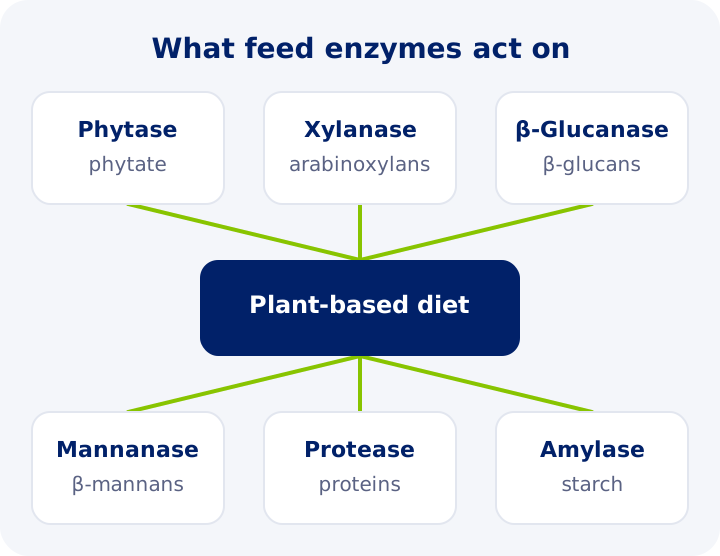
Each feed enzyme is specific to one type of chemical bond, so it is chosen to match a target substrate in the diet.
Phytase
Phytase hydrolyses phytate and releases phosphate that the animal can absorb. This lets nutritionists reduce added inorganic phosphate and lowers the amount of phosphorus in manure, which matters wherever nutrient run-off is regulated.
Xylanase and β-glucanase
These carbohydrases break down arabinoxylans and β-glucans. They reduce digesta viscosity and open up cell walls, which is why they are standard in wheat-, barley- and rye-based diets for poultry and pigs.
Mannanase
Mannanase acts on β-mannans, found in soybean meal, copra meal and palm kernel meal. Breaking them down frees energy and reduces the anti-nutritional effect of these fibres.
Protease
Proteases hydrolyse proteins into peptides and amino acids. In feed they help improve protein digestibility, especially from oilseed meals, and can reduce the nitrogen excreted by the animal.
Amylase
Amylase breaks starch into smaller sugars. It is most useful in diets for young animals whose own amylase production is still developing, and in maize-rich diets where some starch escapes digestion.
Cellulase and lipase
Cellulase helps open fibrous plant material, and lipase supports fat digestion where dietary fat is high. Cellulase is covered in depth in our guide to cellulase in animal feed.
| Enzyme | Target substrate | Main effect | Typical ingredients |
|---|---|---|---|
| Phytase | Phytate | Releases phosphorus | Maize, soybean meal, rice bran |
| Xylanase | Arabinoxylans | Lowers viscosity, opens cell walls | Wheat, rye, DDGS |
| β-Glucanase | β-Glucans | Lowers viscosity | Barley, oats |
| Mannanase | β-Mannans | Frees energy from fibre | Soybean, copra, palm kernel meal |
| Protease | Proteins | Improves protein digestibility | Oilseed meals |
| Amylase | Starch | Supports starch digestion | Maize, young-animal diets |
Benefits for livestock performance and health
Better feed conversion
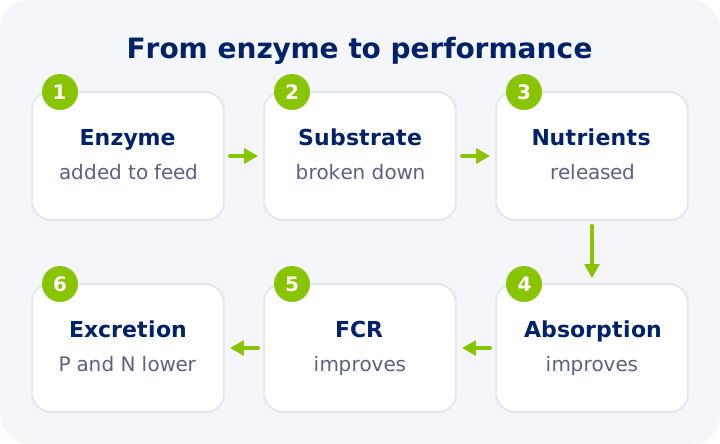
When more of the diet is digested, animals need less feed for each kilogram of gain, egg mass or milk. Improved feed conversion ratio (FCR) is the main economic reason for using enzymes, because feed dominates production costs.
Lower phosphorus and nitrogen excretion
Phytase reduces phosphorus in manure, and protease can lower nitrogen output. Both help farms manage nutrient loads on land and water.
Support for gut health
Enzymes may support gut health indirectly. Less undigested substrate reaches the hindgut, where it could otherwise feed unwanted microbial growth, and lower viscosity in poultry diets is associated with drier droppings and better litter quality. Enzymes are not a substitute for hygiene, biosecurity or veterinary care.
More flexibility with ingredients
Because enzymes unlock nutrients in fibrous by-products and alternative grains, nutritionists can use a wider range of ingredients. They do this by assigning “matrix values”, the nutrients an enzyme is expected to release, when formulating least-cost diets.
Species considerations
- Poultry. Broilers and layers respond well to phytase, xylanase and β-glucanase, particularly on wheat or barley diets. Short digestive transit time makes fast-acting enzymes important.
- Pigs. Phytase is standard. Carbohydrases and protease are often added to diets for weaned piglets and to diets with high levels of by-products.
- Ruminants. Rumen microbes already digest fibre, so responses to added fibrolytic enzymes vary with forage type and enzyme. Phytase is rarely needed because rumen microbes release phytate phosphorus.
- Aquaculture. Phytase and carbohydrases are used in plant-protein-based fish and shrimp feeds, where phytate and fibre limit nutrient use.
Practical points: heat, dosage and combinations
- Heat during pelleting. Conditioning temperatures can reduce enzyme activity. Use heat-stable products or apply liquid enzymes after pelleting.
- Dosage. The right dose depends on diet composition, enzyme activity and species. Use the enzyme dosage calculator for planning, then validate in trials.
- Combinations. Multi-enzyme products target several substrates at once. Check that their activities match the main ingredients in your formula.
- Storage. Keep enzymes cool and dry, in sealed packaging, and use stock within its shelf life.
Tip: Activity units are defined by each supplier's assay method, so two products with the same number on the label may not be equivalent. Ask for the assay method on the TDS and compare products on cost per unit of verified activity.
Working with Enzyme Bioscience
Enzyme Bioscience manufactures phytase, carbohydrases, proteases and other feed enzymes at its GMP, ISO 9001:2015-certified plant in Surat, India, with in-house R&D and QC labs. We can also build a custom multi-enzyme blend through our ENZYVIVE® service. To evaluate a product in your own diets, request a sample, TDS or CoA.
Frequently asked questions
Feed enzymes are proteins added to animal diets to break down specific feed components that animals digest poorly on their own. Common examples are phytase for phytate, xylanase and β-glucanase for fibre, and protease for protein. They help animals use more of the energy, amino acids and minerals already present in the feed.
Phytase is the most widely used feed enzyme. Plant ingredients store much of their phosphorus as phytate, which pigs and poultry cannot fully digest. Phytase releases that phosphorus, so less inorganic phosphate needs to be added and less phosphorus is excreted.
Feed enzymes are not medicines, but better digestion may support gut health. Less undigested material reaches the hindgut, and enzymes such as xylanase can lower digesta viscosity in wheat- and barley-based poultry diets, which is linked to drier litter. Health outcomes still depend on management, hygiene and the whole diet.
It depends on the enzyme and the conditioning temperature. Some enzymes lose activity at high pelleting temperatures, so feed mills either choose heat-stable products or spray liquid enzymes onto the pellets after cooling. Ask the supplier for heat-stability data and check recovery in the finished feed.
There is no single dose. It depends on the enzyme's activity, the ingredients in the diet, the species and the nutrient values the nutritionist wants to apply. Start from the supplier's technical data sheet, use a dosage calculator for planning and confirm the result in a feeding trial.