In this article
Textile wet processing, the sequence of pretreatment, dyeing and finishing that turns greige fabric into a finished product, is one of the most water-, energy- and chemical-intensive parts of the supply chain. Enzymes offer a way to do much of that work under milder conditions. This article walks through the cotton processing chain stage by stage and explains where textile enzymes fit and what they change.
Why wet processing is the focus
Conventional cotton pretreatment relies on strong chemistry and heat. Fabric is desized with acids or oxidisers, scoured in hot caustic soda, bleached with hydrogen peroxide, then rinsed repeatedly to remove residues before dyeing. Each step uses water and energy and adds to the effluent load.
Enzymes change the picture because they are:
- Specific. Each enzyme acts on one type of bond, so it can remove an impurity without attacking the fibre.
- Mild. Most work at moderate temperatures and close to neutral or mildly acidic or alkaline pH.
- Biodegradable. Enzymes are proteins and break down after use.
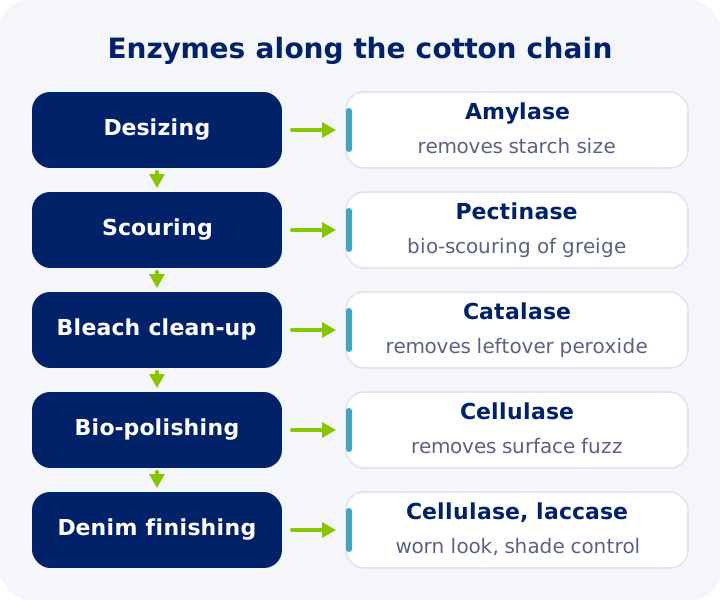
Enzymes along the cotton processing chain
Desizing with amylase
Warp yarns are coated with starch-based size before weaving to reduce breakage. The size must be removed before scouring and dyeing. Amylase breaks the starch into soluble sugars and dextrins that rinse away easily. Compared with acid or oxidative desizing, an enzymatic desizing agent removes the starch without damaging cellulose fibres.
Bio-scouring with pectinase
Raw cotton carries waxes, pectins and other impurities in the outer layers of the fibre, which make it water-repellent. Conventional scouring removes them with hot caustic soda. Bio-scouring uses pectin-degrading enzymes to break down the pectin that holds the waxes in place, so the impurities can be removed under much milder conditions. Bio-scouring enzymes give good absorbency with a softer handle and less fibre damage.
Bleaching support: glucose oxidase and catalase
Hydrogen peroxide is the standard bleaching agent for cotton. Enzymes play two supporting roles:
- Glucose oxidase produces hydrogen peroxide from glucose and oxygen. It has been studied as a way to generate bleaching peroxide in the bath, for example from sugars released during desizing.
- Catalase breaks down residual peroxide into water and oxygen after bleaching. Leftover peroxide can interfere with reactive dyes, so it is normally removed with reducing agents and several hot rinses. A catalase-based peroxide killer does the same job with fewer steps.
Bio-polishing with cellulase
Cellulase removes the tiny protruding fibre ends that make cotton look fuzzy and lead to pilling. The result is a cleaner surface, softer handle and clearer colour. Bio-polishing is covered in depth in our guide to bio-polishing enzymes.
Denim finishing with cellulase and laccase
The worn look of denim was traditionally achieved by tumbling garments with pumice stones and bleaching with sodium hypochlorite. Cellulase can produce a similar abraded effect with far fewer or no stones, reducing machine wear and stone sludge. Laccase, often used with a mediator, can lighten indigo shades as an alternative to chlorine bleaching.
Conventional and enzymatic routes compared
| Process step | Conventional route | Enzymatic route | Main gain |
|---|---|---|---|
| Desizing | Acid or oxidative desizing | Amylase | Removes starch without fibre damage |
| Scouring | Hot caustic soda | Pectinase (bio-scouring) | Milder pH, softer handle |
| Peroxide removal | Reducing agents, hot rinses | Catalase | Fewer rinse baths |
| Denim abrasion | Pumice stones | Cellulase | Less stone sludge and machine wear |
| Denim shade lightening | Hypochlorite bleach | Laccase | Avoids chlorine bleach |
The sustainability case
The environmental benefits of enzymes come from what they allow a mill to stop doing:
- Lower temperatures. Many enzyme processes run cooler than the chemical steps they replace, saving steam.
- Fewer baths. Combining or shortening steps, for example using catalase instead of repeated hot rinses, saves water and time.
- Lighter effluent. Replacing caustic, reducing agents and chlorine bleach can make wastewater easier to treat.
- Safer handling. Working with milder chemistry improves conditions for operators.
These gains vary with each mill’s starting point, equipment and fabric mix. The most convincing case comes from measuring water, energy, chemical use and effluent quality before and after a change.
Practical challenges
Enzymes are biological catalysts, so they need the right conditions:
- Process control. Temperature, pH, time and liquor ratio all affect performance. Small deviations can mean incomplete treatment or excessive fibre loss.
- Compatibility. Some wetting agents, sequestrants and residual chemicals inhibit enzymes. Check auxiliaries before combining them in one bath.
- Deactivation. Enzymes left active can keep working in later stages, so each enzyme step should end with deliberate deactivation.
- Trials. Fabric construction and machine type change results, so lab trials should be followed by bulk trials.
Tip: After each enzyme stage, deactivate the enzyme by raising the bath temperature or shifting pH as the TDS recommends. This stops it from continuing to act on the fabric in the next bath.
Getting started with an enzyme switch
Most mills introduce enzymes one stage at a time rather than redesigning the whole process:
- Pick one stage with a clear problem, such as long rinsing after bleaching or harsh handle after caustic scouring.
- Record a baseline of water, steam, chemicals, time and quality for the current process.
- Run lab trials with the enzyme at the TDS conditions, then adjust for your fabric.
- Move to bulk trials on your own machines and compare against the baseline.
- Update the recipe and quality checks once results are stable.
Working with Enzyme Bioscience
Enzyme Bioscience supplies desizing, bio-scouring, peroxide-killer, bio-polishing and laccase products for textile processing, made at our ISO 9001:2015-certified plant in Surat, India, with in-house R&D and QC labs. Each product’s TDS gives recommended conditions as a starting point for your machines and fabrics. Request a sample, TDS or CoA to run your own trials.
Frequently asked questions
Textile enzymes are proteins, mostly produced by microbial fermentation, that catalyse specific reactions in fibre processing. Examples are amylase for desizing, pectinase for bio-scouring, catalase for removing residual hydrogen peroxide and cellulase for bio-polishing and denim finishing. They work under milder conditions than many conventional chemicals.
Enzymes act only on their target substrate and work at moderate temperatures and pH. That can reduce the use of caustic soda, reducing agents and pumice stones, lower process temperatures and cut the number of rinse baths. The exact savings depend on the mill's existing process and should be measured.
Warp yarns are often coated with starch size to protect them during weaving. Enzymatic desizing uses amylase to break that starch into soluble fragments that wash out easily. It removes size without the fibre damage associated with harsh acid or oxidative desizing.
Hydrogen peroxide left on fabric after bleaching can interfere with reactive dyeing. Catalase breaks the peroxide down into water and oxygen. This can replace chemical reducing agents and reduce the number of hot rinses needed before dyeing.
Most commercial textile enzymes act on natural fibres or their impurities, such as cellulose, starch size and pectin. On cotton-polyester blends they act on the cotton portion only. Enzymes for synthetic fibres are an area of research rather than routine mill practice.