In this article
Gut health has moved from a niche interest to an everyday wellness priority, and shoppers in 2025 are better informed and more sceptical than before. Yet many brands still design for an average consumer who does not exist. This article sets out five practical gut health personas, maps the purchase journey, and shows how ingredient, format and messaging choices can be matched to each.
Why personas work better than averages
An average gut health shopper is a blend of very different people. One wants relief from occasional bloating, another wants to read the strain designation, a third simply wants something that fits a busy morning. A product built for all of them at once often satisfies none.
Personas are a planning tool, not market statistics. They help product, R&D and marketing teams agree who a product is for, which proof that person needs and which format they will actually use. The five below are a practical starting point; refine them with your own customer conversations and sales data.
Five gut health personas
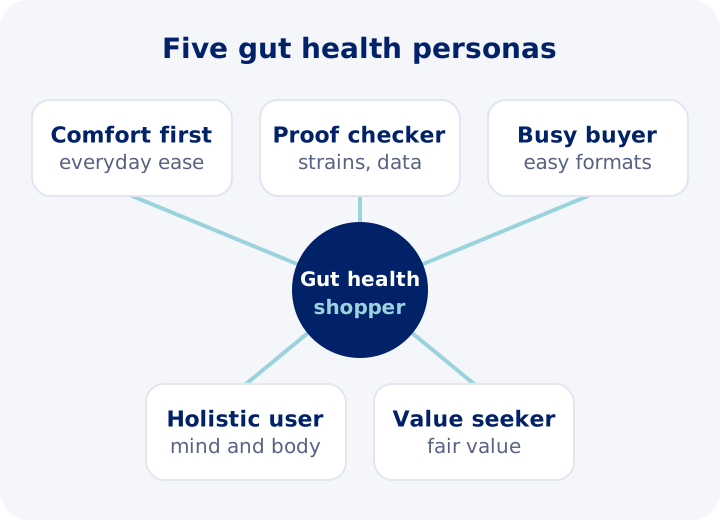
| Persona | Main motivation | Favoured format | Proof they look for |
|---|---|---|---|
| Comfort first | Everyday digestive ease | Capsules, chewables | Clear use directions |
| Proof checker | Evidence and transparency | Capsules, powders | Strain names, study links |
| Busy buyer | Convenience | Sachets, gummies, drinks | Simple routine, taste |
| Holistic user | Whole-body wellness | Blends, functional foods | Ingredient story, quality |
| Value seeker | Fair cost per dose | Larger packs, powders | Count at expiry, price |
A few notes on each persona:
- Comfort first shoppers respond to practical, reassuring language about everyday digestive comfort. Digestive enzymes such as lactase are used in formulations for people who find dairy hard to digest, and can sit well alongside probiotics.
- Proof checkers read labels closely. They want named strains, the amount at the end of shelf life and access to the evidence behind any claim.
- Busy buyers will not change their routine for a product. Format and taste matter as much as the active ingredients.
- Holistic users see gut health as part of wider wellbeing. They value a coherent ingredient story but are also the persona most exposed to over-claiming, so wording needs particular care.
- Value seekers compare cost per dose. A low price that hides a weak count at expiry loses them quickly.
The purchase journey
Each persona moves through broadly the same steps, but needs different content at each one.
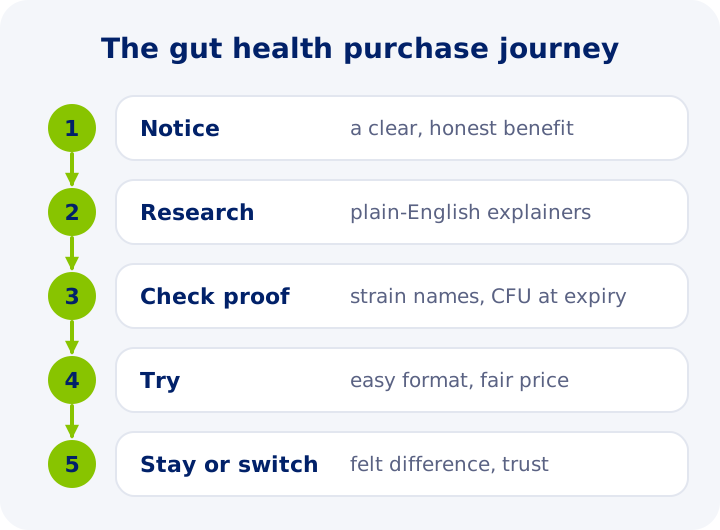
- Notice: a clear, honest benefit on pack or in an advert. Vague wellness language is easily ignored.
- Research: plain-English explainers on how the ingredients work. Many shoppers still find terms like microbiome, prebiotic and CFU confusing.
- Check proof: strain designations, count at expiry, quality certifications and, where appropriate, links to the evidence.
- Try: a format that fits daily life at a fair price, with clear directions on dose and storage.
- Stay or switch: whether the product felt worthwhile and the brand felt trustworthy. Consistent batch quality matters here.
What every persona shares
Despite their differences, all five personas reward the same basics:
- Specific labels: named strains and enzymes, not just broad categories.
- Counts declared at the end of shelf life, not at manufacture.
- Clear storage advice, especially for products that need cool, dry conditions.
- Honest wording that avoids medical promises.
- Visible quality credentials, such as GMP manufacture and recognised certifications.
These are also the details that retailers, pharmacists and dietitians check before recommending a product.
Education gaps worth closing
Many shoppers are interested in gut health but unsure of the basics. Closing these gaps helps every persona move from research to purchase with confidence:
- The difference between probiotics, prebiotics and postbiotics.
- What CFU means, and why the count at expiry matters more than the count at manufacture.
- Why strain names, not just species, appear on better labels.
- How storage conditions affect live cultures.
- How digestive enzymes differ from probiotics, and why some products combine them.
Short explainers work best: a few lines on pack, a QR code to a plain-English page, or a brief FAQ on a product listing. Education also protects the brand, because shoppers who understand a product are less likely to expect results it was never designed to deliver.
Building personas from your own data
The five personas above are a starting point. To make them your own, look at sources you already hold: questions to customer service, product reviews, feedback from retailers and pharmacists, search terms on your website and the reasons customers give for returns. Patterns in these sources show which personas dominate your market and which needs your current range leaves unmet. Revisit them at least once a year, because formats and expectations move quickly.
Turning personas into product decisions
Personas become useful when they drive concrete choices in formulation and packaging.
- Format and stability: shelf-stable formats such as gummies, tablets and functional foods put more stress on live cultures. Spore-forming strains such as Bacillus coagulans are often chosen for these formats because spores tolerate heat and moisture better than many vegetative cells.
- Ingredient pairing: enzyme and probiotic combinations can serve the comfort-first and holistic personas, provided compatibility is tested in the final matrix.
- Pack size and dose: value seekers respond to transparent cost per dose; busy buyers prefer single-serve packs.
- Proof assets: proof checkers need a technical page or leaflet; comfort-first shoppers need simple directions and reassurance.
Tip: Write one sentence per persona that starts "We will win this shopper because…". If the sentence relies on a claim you cannot support, change the product or the persona.
For the R&D view of where gut health formulation is heading, from synbiotics to postbiotics, see our companion article on the top gut health trends for R&D teams.
Compliant messaging for every persona
Whichever persona you target, health wording must stay within the evidence and local rules. Prefer phrases such as “may support digestive comfort” or “formulated with named probiotic strains”. Avoid words such as cure, treat or prevent, and do not let social media copy drift beyond the approved wording on pack. Education, such as simple explainers on what probiotics and enzymes are, often builds more lasting trust than any headline claim.
Working with Enzyme Bioscience
Enzyme Bioscience supplies probiotic strains and digestive enzymes to brands in 21 countries from our GMP, FDA-registered facility in Surat, India. Our ENZYVIVE® service develops custom enzyme and probiotic blends for a specific persona and format. To evaluate ingredients for your next gut health product, request samples, TDS and CoA.
Frequently asked questions
Informed shoppers look for named strains rather than just species, the count guaranteed at the end of shelf life, clear dosage directions and storage instructions. Honest, specific labels also make it easier for retailers and pharmacists to recommend a product.
Convenience-led shoppers tend to prefer once-daily capsules, single-serve sachets, gummies and functional foods or drinks that fit an existing routine. The format must be matched to the ingredient, because some probiotic strains and enzymes are more sensitive to heat, moisture and processing than others.
Use cautious, evidence-matched wording such as "may support digestive comfort" and avoid words like cure, treat or prevent. Check every claim against the evidence for the exact strain and amount used, and against the rules in each market where the product is sold.
Yes. Digestive enzymes such as lactase and alpha-galactosidase are used in formulations for people who find certain foods hard to digest, and they can be combined with probiotics in multi-ingredient products. Compatibility and stability should be tested in the final format.
Yes. Through our ENZYVIVE® custom-blend service we develop enzyme and probiotic blends to a customer's brief, and we supply samples, TDS and CoA on request. Packaging options include 25 and 50 kg HDPE drums and retail pouches.