In this article
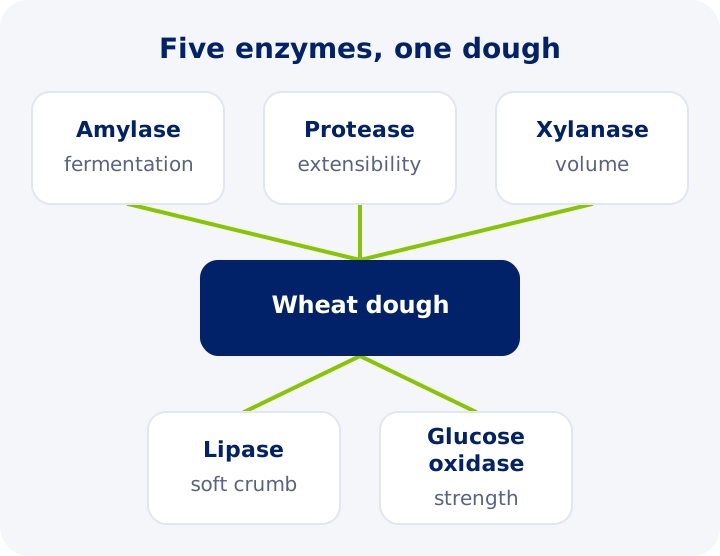
Wheat flour contains starch, gluten proteins, arabinoxylans and lipids, and each of these can be modified by a specific enzyme. That is why a small group of enzymes has changed how bread, buns, biscuits and pastries are made. This article profiles the five enzymes that do most of the work in modern bakery enzyme systems, what each one does and how they are balanced in practice.
The five enzymes at a glance
| Enzyme | Acts on | Main effect in dough | Typical products |
|---|---|---|---|
| Fungal α-amylase | Damaged starch | Sugars for yeast, crust colour, volume | Pan bread, rolls |
| Protease | Gluten proteins | Relaxes dough, less shrinkage | Biscuits, crackers |
| Xylanase | Arabinoxylans | Better handling and volume | Wholemeal and sandwich bread |
| Lipase | Flour and added lipids | Finer crumb, dough stability | Bread, buns |
| Glucose oxidase | Glucose | Stronger gluten network | Industrial bread, frozen dough |
1. Amylase: fermentation, colour and softness
Amylases break starch into smaller sugars and dextrins. In dough, they act mainly on damaged starch granules created during milling.
- What it does. The sugars it releases feed the yeast, keeping gas production steady through proofing. Residual sugars take part in Maillard browning, giving a more even crust colour.
- Types. Fungal amylase is the standard choice for dough because it is inactivated early in baking. Bacterial amylase is more heat-stable and must be used with care. Maltogenic amylase is used specifically to slow staling.
- Watch for. Too much amylase activity can give a sticky crumb and dark crust.
2. Protease: the gluten modulator
Proteases cut peptide bonds in gluten proteins, weakening the network in a controlled way.
- What it does. Dough becomes more extensible and less elastic, so it can be sheeted without springing back.
- Where it is used. Biscuits, crackers, wafers and some pizza bases, where shape and even thickness matter. It can replace sodium metabisulphite in biscuit doughs.
- Watch for. Protease is rarely used in pan bread, because too much weakens the dough and reduces volume.
3. Xylanase: water and volume
Xylanases break down arabinoxylans, the main non-starch polysaccharides in wheat flour. Arabinoxylans bind a lot of water and can interfere with gluten.
- What it does. Water is redistributed to the gluten phase, making dough more extensible and improving oven spring and loaf volume. Crumb structure becomes finer and more even.
- Where it is used. Xylanase is especially valuable in wholemeal and high-fibre bread, where bran disrupts the gluten network.
- Watch for. Overdosing makes dough wet and sticky, which causes problems on dividers and moulders.
4. Lipase: crumb and stability
Lipases act on lipids in flour and on added fats, producing polar lipids that behave like emulsifiers.
- What it does. These compounds stabilise gas cells in the dough, giving a finer, softer crumb and better tolerance to over-proofing.
- Where it is used. Pan bread, buns and rolls, often to replace part of an added emulsifier such as DATEM.
- Watch for. In recipes rich in butter or other dairy fat, lipase can release short-chain fatty acids that cause off-flavours. Choose a lipase suited to the fat system.
5. Glucose oxidase: dough strength
Glucose oxidase converts glucose and oxygen into gluconic acid and hydrogen peroxide. The peroxide promotes cross-links between gluten proteins.
- What it does. Dough becomes stronger and drier, with better tolerance to mechanical stress and longer proofing.
- Where it is used. Industrial bread lines and frozen dough, and as part of a strategy to replace chemical oxidants.
- Watch for. Too much makes dough stiff and reduces extensibility, which can cut volume.
Balancing the five
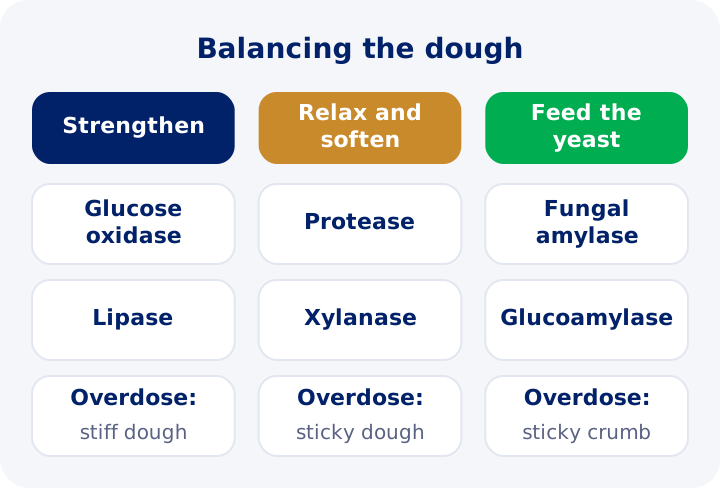
The key to good results is balance. Some enzymes strengthen dough, some relax or soften it, and some mainly feed fermentation. Combining them lets one enzyme offset another’s side effect, for instance glucose oxidase drying out a dough that xylanase has made slightly sticky.
Practical points for formulators:
- Start from the flour. Check protein content, falling number and water absorption before choosing doses.
- Use a dose ladder. Test at least three levels for each enzyme and bake a control each time.
- Change one enzyme at a time. Interactions are common, so isolate effects before combining.
- Plan with tools. The enzyme dosage calculator helps convert supplier recommendations into batch quantities, but final doses should come from bake tests.
Tip: If a dough suddenly becomes sticky after a flour change, check the falling number first. Flour with high natural amylase activity needs less added amylase, and the excess shows up as stickiness.
Example enzyme systems by product
The same five enzymes are combined differently depending on the product:
- Pan bread. Fungal amylase for fermentation and colour, xylanase for volume, glucose oxidase for strength and lipase for a fine, soft crumb. Maltogenic amylase is often added for shelf life.
- Wholemeal bread. A higher share of xylanase to handle the extra arabinoxylans from bran, balanced with glucose oxidase so the dough does not become sticky.
- Biscuits and crackers. Protease is the main enzyme, sometimes with a little amylase for colour. Strengthening enzymes are usually left out.
- Buns and soft rolls. Lipase and amylases for a soft, even crumb, with enough strengthening to support the shape.
These are starting points, not recipes. Every flour and line behaves differently, which is why final systems are set by bake tests.
Beyond the top five
Other enzymes have important niche roles. Maltogenic amylase slows staling, glucoamylase supplies extra fermentable sugar, cellulase supports wholegrain doughs and transglutaminase helps structure in gluten-free products. Most bakeries start with the five enzymes above and then add these as needed.
Working with Enzyme Bioscience
Enzyme Bioscience manufactures amylases, xylanase, lipase, glucose oxidase and other bakery enzymes under GMP and ISO 9001:2015, with Halal, Kosher and FSSAI certifications. We can supply single enzymes or an ENZYVIVE® custom blend balanced for your flour. Request a sample, TDS or CoA to begin bake tests.
Frequently asked questions
The five most widely used are amylase, protease, xylanase, lipase and glucose oxidase. Amylase supports fermentation and crust colour, protease relaxes gluten, xylanase improves handling and volume, lipase improves crumb and dough stability, and glucose oxidase strengthens dough. Maltogenic amylase is also widely used to slow staling.
Fungal amylase is relatively heat-sensitive and is inactivated early in baking, so it mainly acts in the dough and is hard to overdose. Bacterial amylase is more heat-stable and keeps working as the starch gelatinises, so too much can produce a sticky, gummy crumb. They are chosen for different purposes.
Protease partly breaks down gluten proteins, which makes the dough more extensible and less elastic. Sheeted biscuit and cracker doughs then shrink less after cutting and keep a more even shape and thickness. It is also used to replace sodium metabisulphite in some biscuit recipes.
Too much xylanase breaks down more arabinoxylan than needed and releases the water it was holding, so the dough becomes wet and sticky. This causes handling problems on dividers and moulders. The dose should be set by bake tests with the specific flour and process.
Yes. Most commercial bread improvers combine several enzymes, often with ascorbic acid, because their effects complement each other. For example, glucose oxidase can counter the softening effect of xylanase. The balance between them should be tuned to the flour and process.