In this article
Bakeries today are asked to deliver softer bread with a longer shelf life, simpler ingredient lists and steady quality from flour that varies from harvest to harvest. Bakery enzymes help meet all three demands. This article looks at how bakers use enzymes to replace conventional improvers, where the benefits show up in daily production and how to move from idea to scale-up with an enzyme supplier.
Why bakeries are reformulating with enzymes
Several pressures are pushing bakers towards enzyme-based solutions:
- Shorter ingredient lists. Many retailers and consumers prefer products without chemical-sounding additives. Enzymes used as processing aids can help simplify the label, subject to local rules.
- Regulatory change. Some traditional oxidants, such as potassium bromate, are no longer permitted in many markets, so alternatives are needed.
- Flour variability. Protein quality, damaged starch and natural enzyme activity change with wheat variety, harvest and milling. Enzymes give bakers a way to correct for that.
- Waste and cost. Bread that firms quickly is returned or discarded. Extending softness reduces that loss.
Replacing conventional improvers
Most enzyme projects start with a specific ingredient the bakery wants to reduce or remove. The table below shows common swaps and what to watch for.
| Conventional ingredient | Function | Enzyme alternative | Point to check |
|---|---|---|---|
| Chemical oxidants | Dough strength | Glucose oxidase, often with ascorbic acid | Over-oxidation, stiff dough |
| DATEM or SSL emulsifiers | Volume, fine crumb | Lipase or phospholipase | Off-flavour with butterfat |
| Sodium metabisulphite | Relaxes biscuit dough | Protease | Over-softening, spread |
| Monoglycerides | Crumb softness over time | Maltogenic amylase | Gummy crumb if the wrong amylase |
| Malt flour or added sugar | Yeast food, crust colour | Fungal amylase, glucoamylase | Crust too dark |
Glucose oxidase, for example, converts glucose to gluconic acid and hydrogen peroxide. The peroxide promotes cross-links in the gluten network, giving a strengthening effect similar to some chemical oxidants. Lipases act on flour and added lipids to form emulsifying compounds in the dough itself, which is why they can replace part of an added emulsifier.
Enzymes rarely replace an improver one-for-one. Most bakeries end up with a combination, such as glucose oxidase plus xylanase plus lipase, balanced for their own flour and process.
Where the benefits show up
Consistent quality
Enzymes let the bakery adjust dough properties batch by batch. Fungal amylase can top up low natural amylase activity in a flour, and xylanase can even out water absorption. The result is fewer batches outside specification.
Longer softness and less waste
Staling is mainly caused by starch recrystallising after baking. Maltogenic amylase modifies starch during baking so that it recrystallises more slowly, keeping the crumb softer for longer. This can reduce returns and allow longer distribution routes.
Smoother production
On high-speed lines, dough that is too sticky or too tight causes stoppages and rejects. Balanced enzyme systems improve machinability and tolerance to small changes in proofing time or temperature.
Cleaner labels
Because most enzymes are inactivated in the oven, many markets treat them as processing aids. This can support a shorter ingredient list, but always confirm the rules in each country of sale.
Innovation areas
Enzymes also open doors for new products:
- Wholegrain and high-fibre bread. Bran fibres compete for water and disrupt gluten. Xylanase and cellulase help recover volume and soften the crumb.
- Reduced-sugar recipes. Amylases and glucoamylase release sugars from flour starch, which feed the yeast and add some sweetness and crust colour, so less sugar may need to be added.
- Gluten-free products. Without gluten, structure must come from other proteins and hydrocolloids. Transglutaminase, which cross-links proteins, is one tool used to build structure.
- Frozen and par-baked dough. Freezing weakens gluten. Strengthening enzymes help dough keep its volume after thawing.
From brief to production: running enzyme trials
A structured trial plan avoids expensive surprises on the production line.
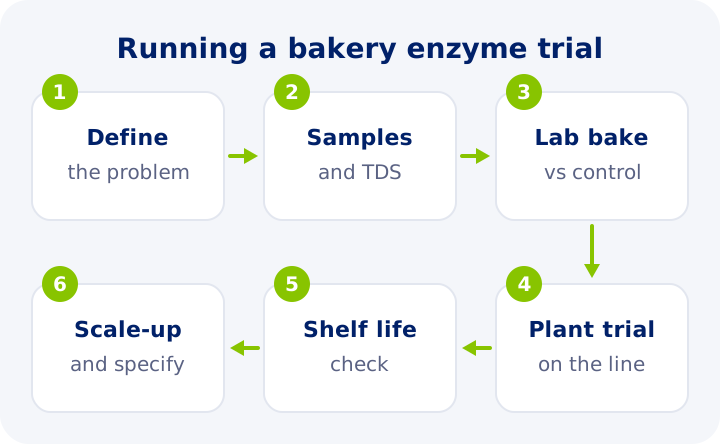
- Define the problem. State the target clearly, for example “keep crumb softness at day five without monoglycerides”.
- Request samples and documents. Ask for the TDS, CoA and allergen and certification statements.
- Lab bake against a control. Test a dose ladder and measure volume, crumb structure and dough handling.
- Plant trial. Run on the real line, with real mixing times and proofing conditions.
- Shelf-life check. Measure firmness and sensory quality over the planned shelf life.
- Scale-up and specify. Fix the dose, the supplier specification and incoming checks.
Tip: Change one variable at a time and always bake a control alongside each trial. Flour batches change, so a result without a same-day control is hard to trust.
Measuring success
Decide before the trial which results will count. Typical measures are specific loaf volume, crumb structure and colour, dough handling scores from the line operators, crumb firmness at several points in shelf life, and a sensory check for flavour and texture. Add cost in use, which means the enzyme cost per batch minus any savings from the ingredients it replaces or the waste it prevents. Recording the same measures for the control and the trial makes the decision clear.
What to ask an enzyme supplier
- How is activity defined, and what assay is used?
- What carrier is the enzyme on (for example wheat flour or starch), and what are the allergen implications?
- Which certifications cover the product, such as Halal, Kosher or FSSAI?
- Is a CoA supplied with every batch?
- What are the storage conditions and shelf life?
- Can the supplier support bake tests and suggest a starting dose?
Working with Enzyme Bioscience
Enzyme Bioscience manufactures bakery enzymes in Surat, India, in an FDA-registered, GMP and ISO 9001:2015-certified facility, with Halal, Kosher and FSSAI certifications listed on our certification page. Our ENZYVIVE® service can develop a custom enzyme blend around your flour and process. Request a sample, TDS or CoA to start your first bake test.
Frequently asked questions
In many cases, yes, at least partly. Glucose oxidase can take on some of the strengthening role of chemical oxidants, lipases can replace part of the emulsifiers used for volume and crumb, and protease can replace sodium metabisulphite in biscuit doughs. The replacement level has to be confirmed in bake tests with your flour and process.
Labelling rules differ between countries. In many markets, enzymes that are inactivated during baking are treated as processing aids, but this is not universal and carriers or other ingredients in the enzyme preparation may need declaring. Check the regulations in each market where the product will be sold.
Anti-staling enzymes such as maltogenic amylase keep crumb softer for longer, which can reduce returns of unsold product. Enzymes also help compensate for variation between flour batches, so fewer batches fall outside specification. Smoother machinability on high-speed lines can reduce dough rejects.
Microbial enzymes can be produced for halal and kosher markets when the manufacturer holds the relevant certification and controls the raw materials and carriers. Ask the supplier for current certificates covering the specific product you plan to use.
It depends on the product and the number of variables involved. A typical route runs from lab bake tests against a control, through plant trials, to shelf-life checks before full production. Changing one ingredient at a time and keeping a control makes the results easier to interpret.