In this article
The benefits of digestive enzymes are real, but they are specific: each enzyme helps with a particular food component. For brands, the commercial challenge is describing those benefits accurately enough to satisfy regulators and informed buyers. This article sets out what digestive enzymes can reasonably be said to do, where the support is strongest and how to word claims with care.
Why undigested food causes discomfort
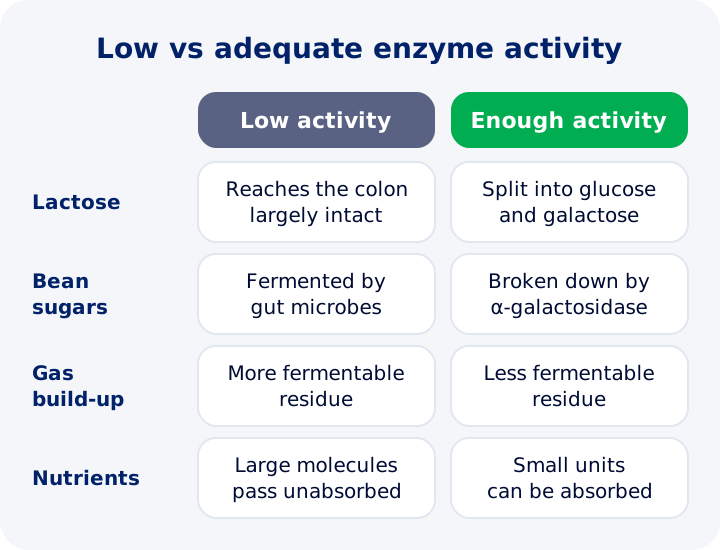
When a food component is not broken down in the small intestine, it travels on to the large intestine. There, resident microbes ferment it and produce gas and other by-products. In some people this leads to bloating, wind or a feeling of fullness after meals.
Lactose and the raffinose-family sugars in beans are the clearest examples. People with low lactase activity cannot split all the lactose in a dairy meal. Humans have no enzyme of their own to break down raffinose and stachyose. Adding the missing enzyme means more of that food component is broken down before it reaches the colon.
Benefits with the clearest support
Breaking down lactose
Lactase is the most established digestive enzyme. It splits lactose into glucose and galactose, and it is used in two ways: added to milk during processing to make lactose-free dairy, and taken in supplement form with dairy meals. In the EU, lactase is one of the few enzymes with an authorised health claim, covering improved lactose digestion in people who have difficulty digesting lactose. Our lactase is supplied with a declared activity for both uses.
Easing the digestion of beans and pulses
Alpha-galactosidase breaks down raffinose and stachyose, which are found in beans, lentils, chickpeas and some vegetables. Because the human gut does not make this enzyme, products containing it are used in formulations that may support comfortable digestion of bean-rich meals.
Supporting protein, fat and starch digestion
Broad-spectrum blends combine protease, lipase and amylase so they act on all three macronutrients. These products may support normal digestion of large or mixed meals. The benefit is more general than lactase or alpha-galactosidase, so claims should be modest. Fat digestion also depends on bile, and protein digestion on stomach acid and the body’s own proteases. Enzyme blends complement these processes rather than replacing them.
A separate category: prescription enzyme therapy
Pancreatic enzyme replacement therapy is a regulated medicine prescribed for exocrine pancreatic insufficiency, for example in people with cystic fibrosis or chronic pancreatitis. It is used under medical supervision and is subject to drug regulations. Over-the-counter enzyme supplements are not substitutes for it, and marketing should never imply that they are.
Claims to avoid
Older marketing for digestive enzymes often promised more energy, weight loss, stronger immunity, protection against “leaky gut” or relief from named conditions such as IBS. These claims are not supported for over-the-counter enzyme products, and many would be treated as disease claims by regulators.
Rules differ between markets. In India, health supplements and nutraceuticals are regulated by FSSAI. In the United States, dietary supplements may describe effects on normal body function but may not claim to treat disease. In the EU, only authorised health claims may be used. Wherever you sell, the safe approach is the same: link the claim to a specific enzyme, describe a normal digestive function and avoid any reference to disease.
| Benefit area | Enzyme | Careful wording example |
|---|---|---|
| Dairy meals | Lactase | “Helps break down lactose” |
| Beans and pulses | Alpha-galactosidase | “Helps break down complex sugars in beans” |
| Protein-rich meals | Protease | “May support protein digestion” |
| Fatty meals | Lipase | “May support fat digestion” |
| Starchy meals | Amylase | “May support carbohydrate digestion” |
| Any product | — | Never “cures”, “treats” or “prevents” |
From benefit to compliant product
A credible digestive enzyme product links each claim to the right enzyme at a meaningful activity. The process below is a practical route from concept to label.
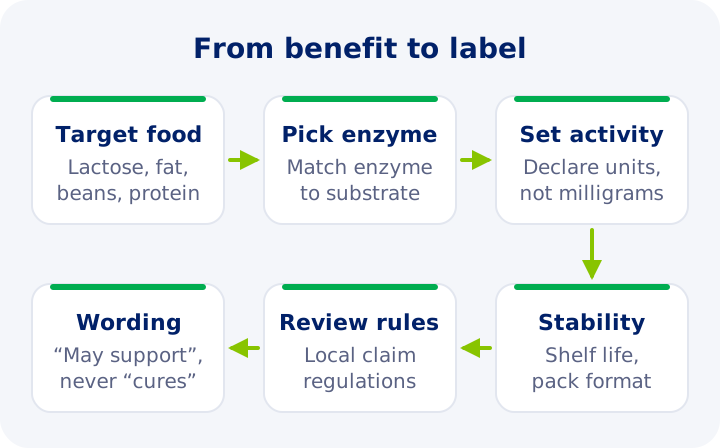
- Define the target food: Lactose, bean sugars, protein, fat or starch each need a different enzyme.
- Choose the enzyme and source: Consider pH behaviour, dietary status (vegetarian, Halal, Kosher) and compatibility with other ingredients.
- Set activity in units: Declare the activity of each enzyme per serving and state the assay method.
- Confirm stability: Run shelf-life studies in the final pack. Enzymes lose activity with heat and moisture, and proteases can degrade other enzymes in the same blend.
- Review local regulations: Check permitted claims and labelling rules in each market.
- Write the claim: Use functional wording such as “may support” or “helps break down”, tied to the enzyme.
Tip: Keep a short evidence file for each claim, covering the enzyme, its activity per serving and the published basis for the wording. Regulators and retail buyers increasingly ask for it.
Practical points for formulators
Digestive enzymes act on food in the gut, so products are normally designed to be taken with meals. Capsules and tablets suit broad-spectrum blends. Chewables and sachets suit lactase and alpha-galactosidase products that consumers take with specific foods. Lactase can also be added directly to milk during processing.
Dosage should also be realistic. Activity per serving is set from the substrate the product targets, the typical meal size and the format, then confirmed in application trials and stability studies rather than copied from another brand’s label.
Format affects stability. Liquids and gummies are harder to stabilise than dry capsules, so they may need overages, which are deliberate extra activity at manufacture to cover losses during shelf life. Any overage should be justified by stability data. For guidance on choosing between enzymes, see our companion guide to the best digestive enzymes for gut health.
Working with Enzyme Bioscience
We supply digestive enzymes in food and pharmaceutical grades, from single enzymes to multi-enzyme blends, through our food enzymes and pharmaceutical enzymes ranges. Each enquiry can be supported with a TDS and CoA. Request samples to start formulation trials.
Frequently asked questions
Digestive enzymes help break specific food components into smaller units the body can absorb. Lactase helps break down lactose, alpha-galactosidase acts on the complex sugars in beans, and protease, lipase and amylase act on protein, fat and starch. Products containing them may support comfortable digestion of the foods they target.
Some bloating comes from gut microbes fermenting food components that were not digested earlier, such as lactose or bean sugars. Enzymes that break those components down may reduce the fermentable residue. Responses differ between people, and persistent symptoms should be assessed by a doctor.
No. Over-the-counter digestive enzyme products should not claim to cure, treat or prevent any disease. Prescription pancreatic enzyme therapy for exocrine pancreatic insufficiency is a regulated medicine used under medical supervision, which is a separate category.
Digestive enzymes act on food that is present in the gut, so products are normally designed to be taken with or just before a meal. The exact directions depend on the product format and should be set by the brand based on its formulation and local regulations.
Activity should be declared in units for each enzyme, such as ALU for lactase or FIP units for lipase, with the assay method stated. Weight alone does not show how much enzyme activity a product delivers.