In this article
Postbiotics have moved from an academic term to a product category in only a few years. They promise some of the appeal of probiotics without the hardest problem in probiotic formulation, keeping cells alive. This article explains what qualifies as a postbiotic, how postbiotics are made, where they create opportunities for brands and what challenges still need careful handling.
What counts as a postbiotic
In 2021, an expert panel of the International Scientific Association for Probiotics and Prebiotics (ISAPP) published a consensus definition. In summary, a postbiotic is a preparation of deliberately inactivated microorganisms, their cell components or both, which has been shown to benefit the health of the host.
Three points in that definition matter for product developers:
- The starting microorganism must be defined, ideally to strain level.
- The preparation is inanimate: the cells have been deliberately inactivated.
- A health benefit must be shown for the preparation itself, not assumed from the live strain.
The definition also clarifies what is not a postbiotic. Purified metabolites on their own, such as a purified short-chain fatty acid, are not postbiotics under the ISAPP definition. Older marketing often used the word for any fermentation by-product, so check how a supplier defines its material. Related terms such as heat-killed, tyndallised or “paraprobiotic” describe overlapping concepts.
How postbiotics compare with other biotics
| Term | What it is | Live? | Key formulation issue |
|---|---|---|---|
| Prebiotic | A substrate selectively used by host microbes | No | Dose, taste, tolerance |
| Probiotic | Live microorganisms with a shown benefit | Yes | Viability to end of shelf life |
| Synbiotic | A mixture of live microbes and substrates | Yes | Viability plus compatibility |
| Postbiotic | Inactivated microbes or their components | No | Definition and batch consistency |
How a postbiotic is made
Most postbiotics follow a similar process. A defined strain is fermented under controlled conditions, the cells are inactivated, usually by heat, and the material is recovered and dried. The final step, standardisation, is what turns a fermentation by-product into a defined ingredient.
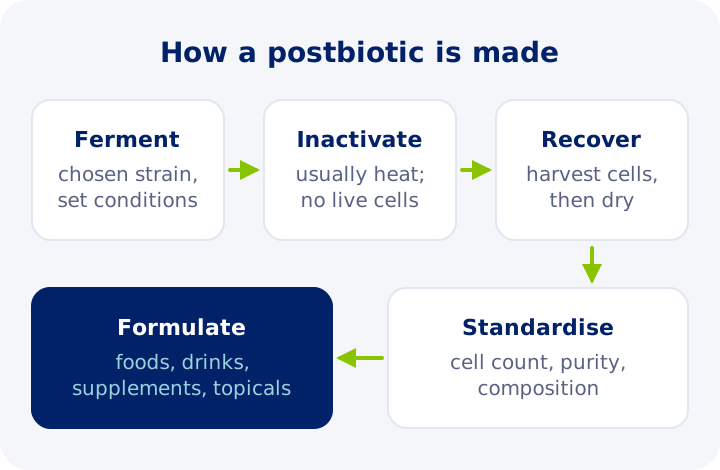
Every step shapes the final product. The strain, growth medium, inactivation method and drying conditions all change the composition, so a postbiotic is effectively defined by its process as well as its strain. Postbiotics are often specified by the number of cells per gram before inactivation, alongside purity and composition tests.
Why brands are interested
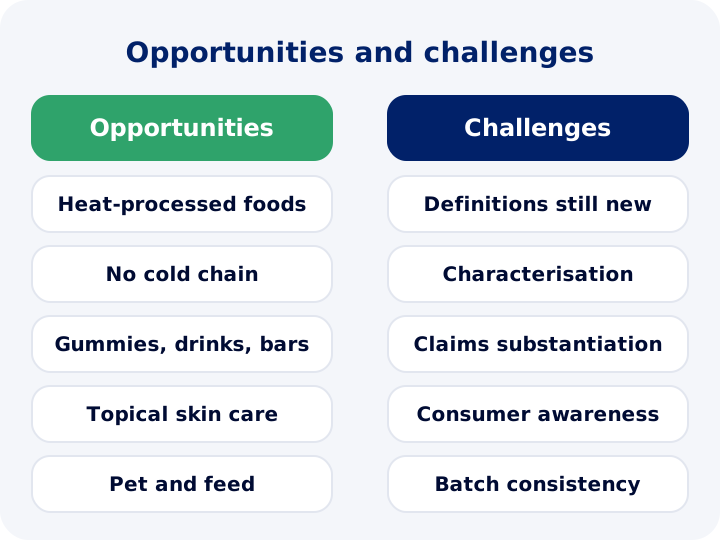
The main attraction is stability. Live probiotics lose viability with heat, moisture and time; postbiotics do not have viable counts to lose. That brings several practical advantages:
- No cold chain and fewer restrictions on storage.
- Compatibility with heat-processed foods such as baked goods and pasteurised drinks.
- Easier formulation in high-water-activity formats like gummies and beverages.
- Use in topical products, where live cultures are difficult to stabilise.
- Simpler combination with minerals, acidic botanicals and other actives that can harm live cells.
Removing viability as a concern does not remove the need for a safety assessment, but it does take away one of the biggest formulation risks.
Opportunities by segment
- Supplements: capsules, tablets and chewables positioned for digestive or general wellbeing, often alongside vitamins and minerals.
- Functional foods and beverages: bars, cereals, gummies and ready-to-drink products where live cultures would not survive.
- Cosmetics: ferment lysates and similar ingredients are already familiar in skin care, as discussed in our article on enzymes and probiotics in skin health.
- Pet food and animal nutrition: pelleted and extruded feeds, where processing heat is a challenge for most live cultures.
Challenges to address
Regulatory definitions
Few regulations yet name postbiotics as a category. Products are regulated under existing food, supplement, feed or cosmetic rules, and in some markets a new preparation may need novel food or equivalent approval. Check status market by market before launch.
Characterisation and consistency
Because composition depends on process, two postbiotics from the same strain can differ. Brands need clear specifications: strain identity, inactivation method, cell count before inactivation and tests for composition and contaminants, applied to every batch.
Claims substantiation
Evidence for a live probiotic does not automatically transfer to its inactivated form, and evidence for one postbiotic preparation does not transfer to another. Claims must be supported by data on the preparation actually sold, and must avoid any suggestion of treating or preventing disease.
Consumer awareness
Most consumers are still learning what probiotics and prebiotics are. “Postbiotic” needs simple, accurate explanation on pack and online, without implying that it is simply a better probiotic.
Formulation notes
Postbiotics are easier to stabilise than live cultures, but they are not maintenance-free. Points to check include:
- Dose expression: inclusion is usually stated as cells per serving before inactivation, so the specification and label must use the same basis.
- Sensory impact: dried fermentates can bring colour, odour or flavour, especially in clear drinks and light-coloured gummies.
- Physical properties: solubility, dispersibility and flow can differ widely between preparations and affect mixing and filling.
- Oxidation and moisture: although viability is not a concern, components can still degrade, so real-time stability testing of composition is still needed.
- Labelling: the ingredient name should describe what it is, for example a heat-treated preparation of a named strain, in line with local labelling rules.
Tip: Ask any postbiotic supplier for the strain designation, the inactivation method and the cell count before inactivation. If they cannot provide all three, the ingredient is not well defined.
Practical pointers for brands
- Use the ISAPP definition as the benchmark in specifications and marketing copy.
- Choose formats where the stability advantage is real, such as gummies, bars, drinks and heat-treated foods.
- Build the claim around evidence on the exact preparation, not the parent strain.
- Explain the term simply and avoid positioning it as a cure-all.
- Consider combinations with prebiotics, probiotics or enzymes where each component has a distinct role.
Working with Enzyme Bioscience
Enzyme Bioscience manufactures probiotic strains and enzymes with in-house R&D and QC labs and FDA-registered, GMP-certified production. Our ENZYVIVE® custom-blend service can help you combine biotics and enzymes for your format. Request samples, a TDS or a CoA to begin evaluation.
Frequently asked questions
According to the 2021 consensus of the International Scientific Association for Probiotics and Prebiotics (ISAPP), a postbiotic is a preparation of non-living (inanimate) microorganisms, their components or both, that provides a health benefit to the host. It is usually made by fermenting a defined strain and then inactivating it, most often with heat.
Probiotics are live microorganisms, so their benefit depends on staying alive until use. Postbiotics are deliberately inactivated, so they do not need to survive processing or storage. Both must be defined and shown to confer a benefit.
Not on their own under the ISAPP definition. Purified microbial metabolites such as short-chain fatty acids are not counted as postbiotics unless they are part of a preparation that includes inanimate microbial cells or cell components. Older articles often used the term more loosely.
Postbiotics suit formats that are hard for live cultures, such as baked goods, gummies, bars, ready-to-drink beverages and products without a cold chain. They are also used in cosmetics, where ingredients described as ferment lysates are already common, and in pet and animal products.
Most regulations do not yet have a specific category for postbiotics. They are regulated under existing food, supplement, feed or cosmetic rules, and in some markets a new preparation may need novel food or similar approval. Health claims follow the same rules as for any other ingredient.