In this article
Detergent enzymes are one of the most successful industrial uses of biotechnology. They allow detergents to remove tough stains at lower wash temperatures, in shorter cycles and with milder chemistry. For detergent manufacturers, they are now a standard part of most laundry formulations. This article explains which enzymes do what in the wash, why they make cold washing possible and what formulators need to consider for powders and liquids.
What enzymes add to a laundry detergent
A detergent has several jobs. Surfactants lower surface tension and lift soil, builders soften water, and polymers stop soil from settling back onto fabric. Many stains, however, are large organic molecules that cling to fibres and are hard to dissolve. Enzymes break those molecules into smaller pieces that the rest of the detergent can then remove.
Because enzymes are catalysts, a small amount of enzyme can act on a lot of stain during a wash cycle. Their specificity means each enzyme is chosen for a stain type.
The core laundry enzymes
| Enzyme | Main targets | Benefit in the wash |
|---|---|---|
| Protease | Blood, egg, grass, sweat, food proteins | Removes protein-based stains |
| Amylase | Starch from rice, pasta, sauces | Removes starchy residues that trap other soil |
| Lipase | Oils, butter, sebum | Improves removal of greasy stains |
| Cellulase | Fibre ends on cotton | Colour care, less pilling and greying |
| Mannanase | Gum thickeners in foods and cosmetics | Removes gum-based stains |
Protease
Protease is the most widely used detergent enzyme. It hydrolyses peptide bonds in protein stains, breaking them into fragments that dissolve. Detergent proteases are chosen to work in the alkaline conditions of a typical wash. Detzyme-Pro is our protease product for protein stains.
Amylase
Starch from food acts like a glue that holds other soil on fabric. Amylase breaks starch into soluble sugars and dextrins, releasing both the starch and the soil it traps.
Lipase
Lipase hydrolyses fats and oils into fatty acids and glycerol, which the surfactants can remove more easily. It helps with collar and cuff soils, cooking oil and cosmetic stains. See Detzyme-Lip.
Cellulase
Cellulase is a fabric-care enzyme. With repeated wear and washing, cotton develops small fibre ends that make garments look fuzzy and dull. Cellulase removes them, keeping colours brighter and reducing pilling. See Detzyme-Cel.
Mannanase and multi-enzyme blends
Mannanase breaks down galactomannan gums such as guar and locust bean gum, used as thickeners in foods, sauces and cosmetics. Because real laundry contains mixed stains, many detergents use a blend of several enzymes. Detzyme-Super is our multi-enzyme product for broad stain removal.
How enzymes make cold washing work
Without enzymes, many stains need hot water to soften and dissolve. Enzymes break them down chemically instead, so the wash can be cooler.
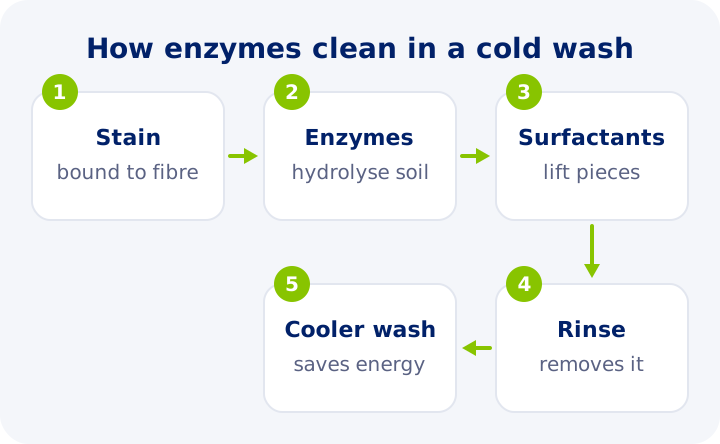
Heating water accounts for much of the energy used by a washing machine, so lower wash temperatures reduce energy use and costs. Detergent enzymes are therefore selected for good activity at low and moderate temperatures, as well as for stability in the detergent.
Formulating with detergent enzymes
Enzymes are proteins, and detergents are a harsh environment for proteins. The formulation must protect enzyme activity through storage and deliver it in the wash.
Powder detergents
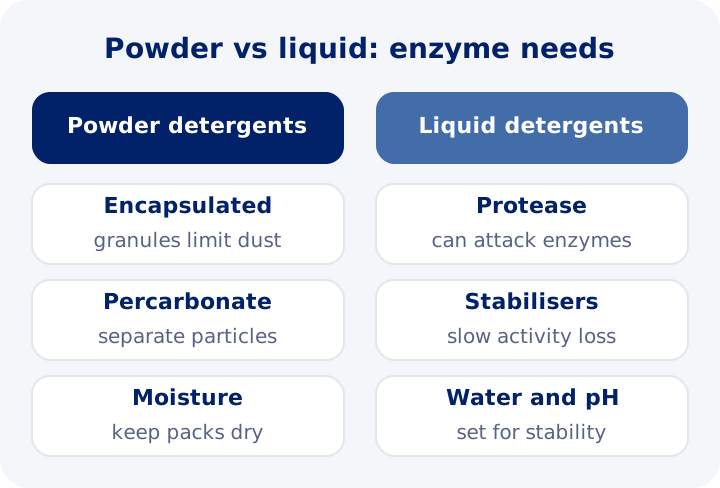
In powders, enzymes are supplied as coated or encapsulated granules. The coating reduces dust, protects the enzyme from bleach and moisture, and releases it in the wash. Oxygen bleach such as sodium percarbonate is kept in separate particles. Packs should keep moisture out, because humidity speeds up enzyme loss.
Liquid detergents
Liquids are more challenging. Water allows enzymes to unfold slowly, and proteases can digest other enzymes and themselves. Formulators use stabilisers such as polyols, calcium and enzyme-stabilising additives, and set pH and water content to slow activity loss. Strong oxidants are generally kept out of enzyme liquids.
Testing performance and stability
- Wash tests. Use standard stain monitors at the temperatures and cycle lengths your consumers use.
- Storage tests. Measure residual enzyme activity over time, including accelerated tests at elevated temperature.
- Dose. Activity units differ between suppliers. Plan batch quantities from the supplier’s activity data and confirm them with wash tests.
Tip: When a liquid detergent loses performance on storage, measure each enzyme separately. Protease activity often holds up while amylase or lipase falls, which points to protease attack rather than general instability.
Choosing enzymes for your market
The right enzyme mix depends on how and where the detergent will be used:
- Wash temperature and cycle. Short, cool cycles need enzymes with good low-temperature activity.
- Washing method. Products for hand washing, top loaders and front loaders face different times, dilutions and agitation.
- Water hardness. Hard water affects surfactants and builders and can change overall cleaning performance.
- Local stains. Diets and climates shape typical soils, such as oily food stains or heavy sweat and sebum.
Testing with local soils and wash conditions gives a better guide than generic performance claims.
The environmental case
Enzymes support more sustainable laundry in several ways:
- Lower wash temperatures reduce energy for heating water.
- Biodegradability. Enzymes are proteins and break down after use.
- Efficient chemistry. Enzymes can help formulators reduce some other ingredients while maintaining performance.
- Longer garment life. Cellulase helps cotton garments keep a good appearance for longer.
As with any product, environmental claims should be supported by evidence for the whole formulation.
Safety and handling
Concentrated enzymes can cause respiratory sensitisation if inhaled as dust or aerosol. That is why detergent enzymes are supplied as low-dust granules or liquids, and why detergent factories use dust control, ventilation, PPE and exposure monitoring when handling them. Finished detergents are formulated to minimise exposure for consumers.
Working with Enzyme Bioscience
Enzyme Bioscience manufactures protease, lipase, cellulase and multi-enzyme products for detergents at its ISO 9001:2015-certified plant in Surat, India, packed in 25 or 50 kg HDPE drums. See the full detergent enzyme range or request a sample, TDS or CoA for your next formulation.
Frequently asked questions
Enzymes break down specific stains into smaller fragments that the detergent can wash away. Protease targets protein stains, amylase targets starch, lipase targets fats and oils, and mannanase targets gum-based stains. Cellulase is used mainly for fabric care, helping to keep cotton smooth and colours bright.
Enzymes are one of the main reasons modern detergents perform well at lower temperatures. They break down stains that surfactants alone struggle to remove without heat. Performance still depends on the enzyme type, wash time and formulation, so detergents should be tested at the temperatures consumers actually use.
Enzymes are biodegradable proteins, and they allow effective washing at lower temperatures, which reduces energy for heating water. They can also help formulators reduce some other ingredients. The overall footprint still depends on the full formulation, packaging and use, so claims should be backed by evidence.
Cellulase acts on the small fibre ends that appear on cotton garments with wear. Removing them reduces fuzz and pilling, helps colours look brighter and can reduce greying caused by soil trapped in the fibres. It is a fabric-care enzyme rather than a stain remover.
Oxygen bleach such as sodium percarbonate is used in many enzyme powders, but the enzymes are protected as coated granules and kept in separate particles. Chlorine bleach destroys enzyme activity. In liquids, combining enzymes with bleach is much harder and usually avoided.